Genius Tiny Kitchen Layout Ideas for Apartments and Studios
Apartment and studio kitchens ask a lot from a small amount of space. They often sit in the same room as the bed, sofa, desk, or dining table, which means the kitchen has to function well and look composed from every angle. A genius tiny kitchen layout is not just about cramming in storage. It is about making cooking possible without letting the kitchen dominate the entire apartment. Smart plans use vertical space, compact appliances, movable surfaces, and visual restraint to create a kitchen that feels complete. The best ideas are practical enough for daily meals and polished enough to share space with the rest of your life.
A: A one-wall kitchen often preserves the most living space, especially when supported by vertical storage and a fold-down surface.
A: Yes, even a wall table, bistro table, or counter ledge can create a real meal spot.
A: They are useful when they lock, store needed items, and have a clear place to park.
A: Use effective ventilation, lids when appropriate, and avoid underpowered recirculating fans for frequent high-heat cooking.
A: Only when habits require them; compact appliances often make apartment kitchens function better.
A: Use calm cabinet fronts, closed storage, coordinated wall color, and fewer countertop objects.
A: Daily dishes, cookware, spices, and cleaning tools should sit within comfortable reach.
A: It can be, if edited carefully and used for attractive tools rather than every object owned.
A: Near prep and cleanup, ideally concealed but not so hidden that daily use becomes annoying.
A: A defined cooking sequence, integrated storage, good lighting, and a small but intentional dining moment.
Make the One-Wall Kitchen Work Harder
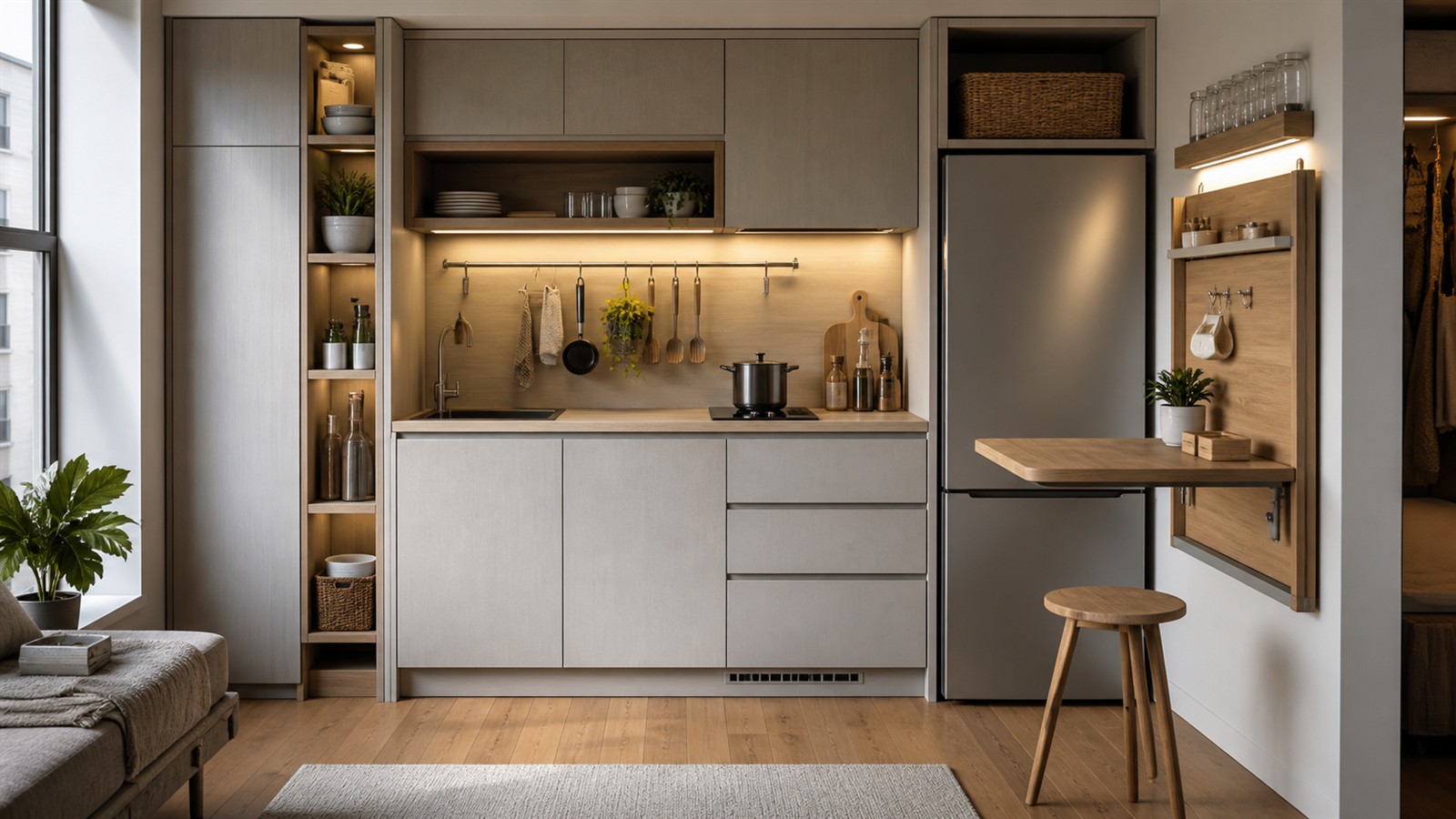
The one-wall kitchen is common in studios because it preserves the most open floor area. Its weakness is limited counter space, so the sequence of appliances and storage matters. A strong one-wall layout keeps the refrigerator at one end, the sink near the middle, and the cooking zone with at least a small landing area nearby. Even a narrow stretch of counter between sink and cooktop can make cooking feel less improvised.
Upper cabinets should be planned with equal care. Ceiling-height storage can hold seasonal items, while daily dishes should stay easy to reach. If the wall is long enough, a tall pantry cabinet at one end can visually frame the kitchen and prevent supplies from spilling into the living area.
Use Galley Logic in Narrow Apartments
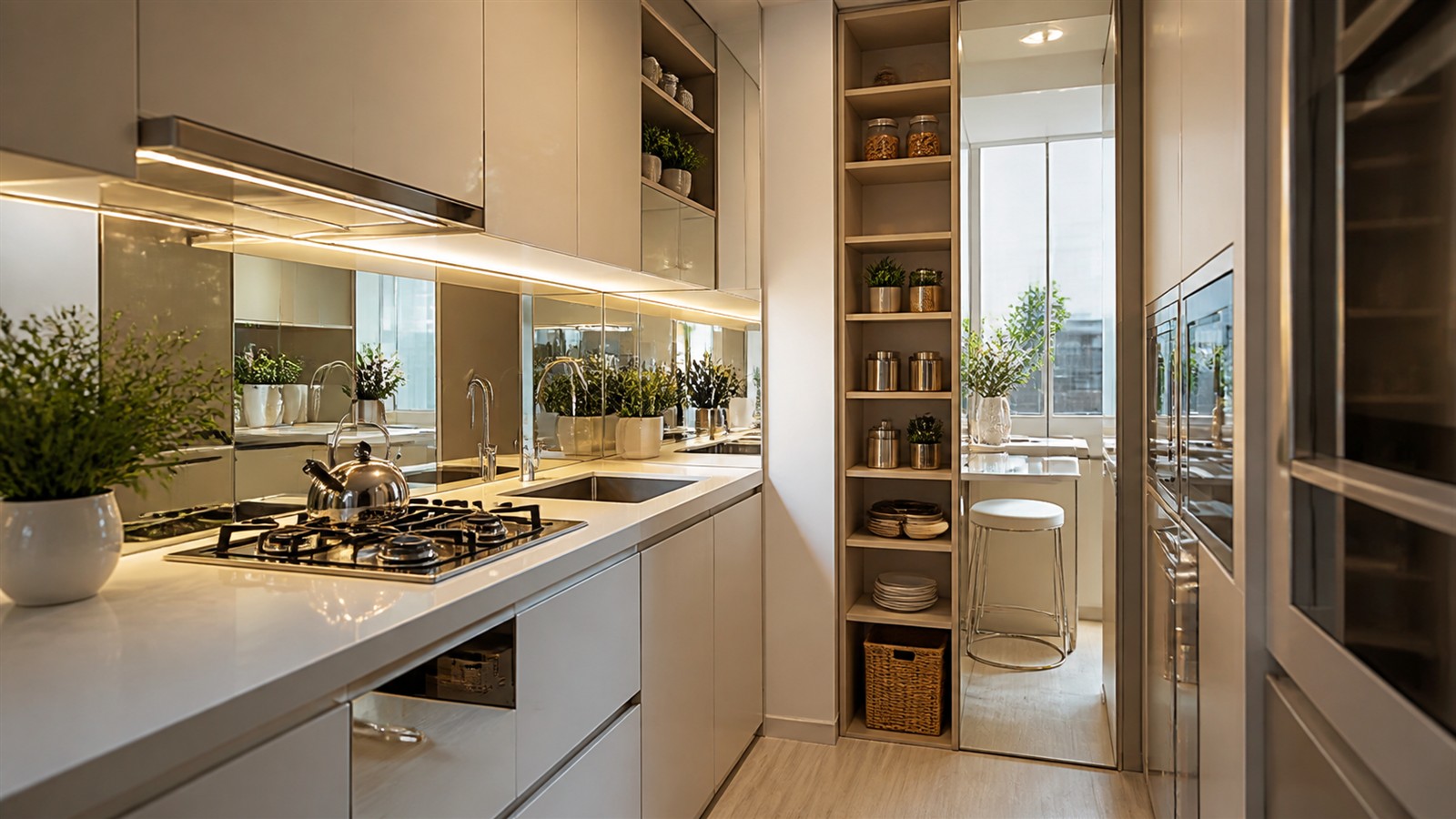
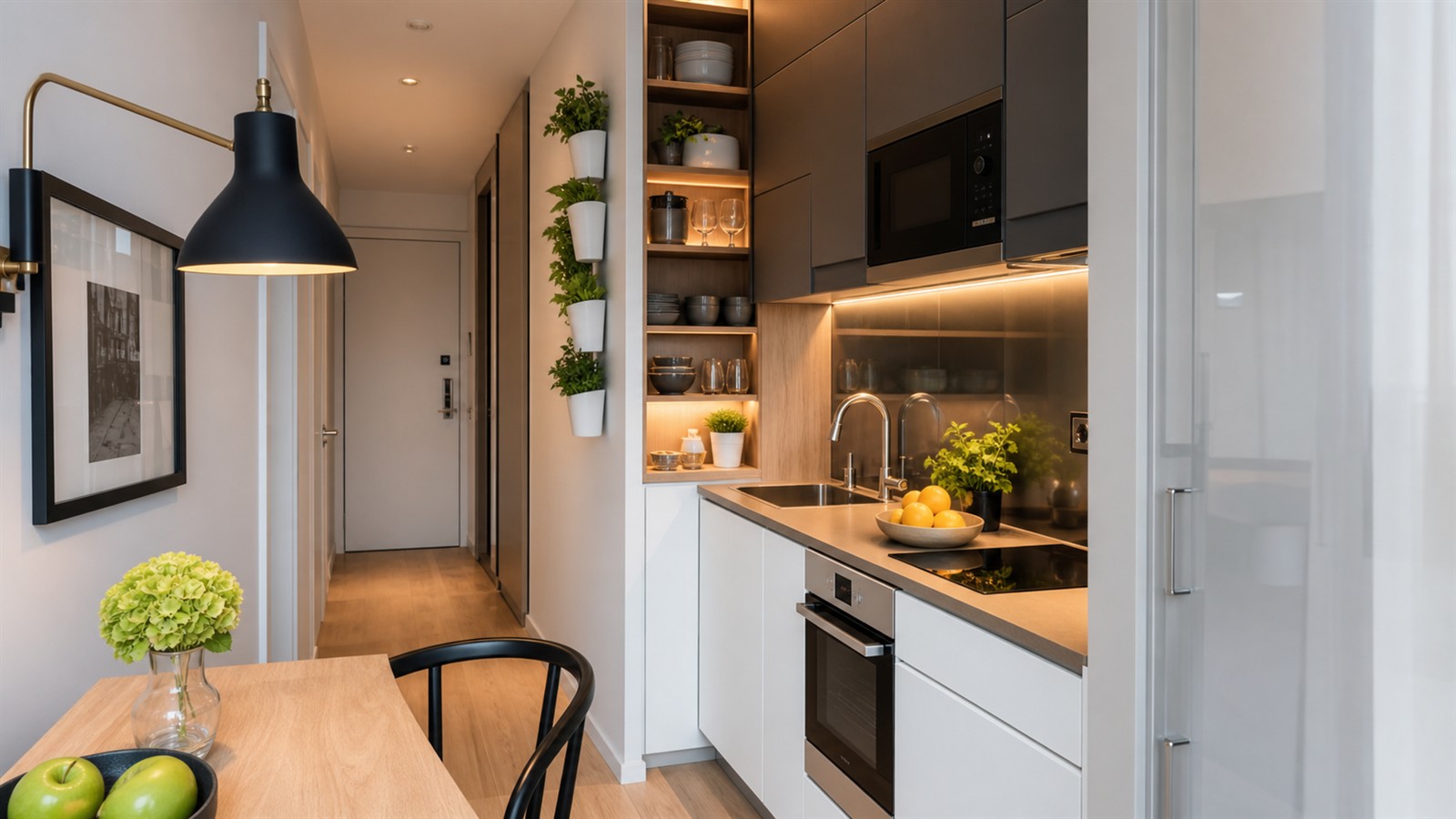
Some apartments allow a compact galley, either in a small pass-through space or along one wall with a parallel storage piece. Galley logic works because it creates two efficient sides: one for wet and cooking tasks, another for pantry, prep, or serving. The challenge is keeping the aisle clear and avoiding door conflicts.
If a full second cabinet run is too much, consider a shallow console, rolling cart, or wall-mounted counter opposite the main kitchen. This gives the cook a landing space without creating a cramped corridor. The piece should look intentional from the living area, not like temporary overflow.
Choose Furniture That Doubles as Kitchen Support
In a studio, furniture often has to serve the kitchen. A dining table can become prep space, a console can hold small appliances, and a bench can store linens or pantry goods. The key is choosing pieces with the right height, durability, and storage. A delicate writing desk may look pretty but fail quickly beside food, water, and heat.
Fold-down tables are especially useful when floor space changes throughout the day. They can serve breakfast, chopping, laptop work, or extra landing space, then disappear when the room needs to feel larger. Wall-mounted versions should be installed securely and paired with chairs that store neatly.
Hide What Looks Like Clutter
Tiny apartment kitchens are usually visible all the time, so clutter has a bigger visual impact. Packaging, dish racks, cleaning supplies, and countertop appliances can make the entire home feel unsettled. Closed storage, appliance garages, bins inside cabinets, and a compact drying solution help the kitchen recede when cooking is done.
This does not mean the kitchen has to be bare. A rail with attractive tools, a small shelf for dishes, or a beautiful kettle can add personality. The difference is curation. Visible items should be useful, good-looking, and limited.
Use Vertical Space Without Making a Wall of Stuff
Vertical storage is the apartment cook’s friend, but it must be controlled. Tall cabinets, hooks, rails, shelves, magnetic strips, and peg systems can all help. Used together without restraint, they can make the kitchen wall feel frantic. Choose the vertical tools that solve specific problems, then leave some blank space for visual rest.
Store lightweight and occasional items higher. Keep heavy cookware low. Put the most-used tools within easy reach of the prep area. If something requires a step stool every day, the layout is working against you.
Let Compact Appliances Match Real Habits
Apartment kitchens often benefit from smaller appliances, but only when those appliances match how you cook. A narrow refrigerator works for frequent shoppers but may frustrate batch cooks. A portable induction burner may be enough for a minimalist studio, while another household may need a real range. A combination microwave can replace several devices if it is genuinely used.
Before buying, consider noise and heat. In a studio, appliance sound travels to sleeping and working areas. A loud dishwasher or refrigerator may be more disruptive than it would be in a separate kitchen. Quiet operation is a layout feature when all rooms share the same air.
Create a Dining Moment, However Small
Even the smallest studio benefits from a defined place to eat. It might be a fold-down wall table, a narrow counter with two stools, a bistro table by a window, or an island cart with a stool tucked under it. The dining spot tells the kitchen where daily meals should land, which helps prevent every meal from drifting to the sofa or bed.
Scale is everything. A table that blocks the refrigerator will become annoying, no matter how attractive it is. A stool that cannot tuck in will make the apartment feel crowded. Choose pieces that respect the room’s walking paths and can shift when guests visit.
Use Visual Continuity to Make the Studio Feel Larger
Because the kitchen shares space with the rest of the apartment, finishes should support the whole room. Cabinet colors that relate to wall paint, flooring that continues without abrupt breaks, and hardware that echoes furniture details can make the kitchen feel integrated. The goal is not to hide the kitchen completely, but to keep it from visually shouting.
Mirrored or glossy surfaces can brighten a tiny kitchen, but they should be used sparingly. Too much reflection can look busy. A pale backsplash, under-cabinet lighting, and clean cabinet lines usually expand the room more gracefully.
Build a Reset Routine into the Layout
Tiny kitchens need fast resets because there is nowhere for mess to hide. The layout should make resetting easy: trash near prep, dish storage near the sink or dishwasher, cleaning supplies close to the work surface, and a drying rack that stores away. If putting things away requires moving several other items first, clutter will win.
A genius apartment kitchen feels good at rest. It may be small, but it has a clear place for cooking, a clear place for eating, and a clear way to return the room to calm. That is what makes the layout feel clever rather than merely compact.
Plan Around What Visitors See
In an apartment or studio, guests may see the kitchen before they see anything else. The layout should consider that public angle. A tidy rail, a clean counter edge, a slim pendant, or a cabinet panel that hides the refrigerator side can make the kitchen feel integrated with the home. The goal is not to pretend the kitchen is not there. The goal is to make it look intentional when it is part of the main room.
Think about the view from the sofa and bed as well. If the sink is always visible, choose a compact drying system and a faucet that looks good at rest. If the pantry is exposed, use doors or bins that quiet the visual field. These choices help the entire apartment feel calmer.
Use Portability with Restraint
Renters and studio dwellers often rely on portable solutions, and many of them are genuinely useful. A cart can add prep space. A freestanding shelf can become a pantry. A magnetic rack can store spices without drilling into tile. The risk is accumulating too many temporary pieces until the room feels improvised.
Portable elements should match in finish, serve a defined job, and leave circulation clear. One excellent cart is better than several small stands. A single well-organized shelf is better than storage scattered across the apartment. Restraint makes flexible solutions look designed rather than accidental.
Separate Food Storage from General Storage
Studio apartments often blur storage categories because every closet and cabinet is under pressure. Still, food storage works better when it has a dedicated zone. Pantry goods mixed with office supplies, cleaning tools, or linens become harder to manage and less pleasant to use. Even a narrow cabinet or labeled shelf group can create enough order to make cooking easier.
This separation also reduces overbuying. When pantry space is visible and finite, it becomes easier to shop for the way the apartment actually functions. A tiny kitchen does not need to hold every possible ingredient. It needs to hold the ingredients that support real meals in the available space.
Keep Cooking Gear Proportional
Apartment kitchens work better when cookware matches the scale of the appliances and sink. A giant stockpot, oversized sheet pans, and bulky countertop machines may be useful in larger homes but punishing in a studio. Choose pans that fit the burner, boards that fit the counter, and storage containers that stack cleanly. Proportional gear makes the layout feel smarter without changing the walls.
This does not mean giving up real cooking. It means selecting tools that earn their space. A high-quality skillet, a compact saucepan, a nesting bowl set, and a sharp knife can support many meals without overwhelming the cabinets. The smaller the kitchen, the more each object should justify its place.
Make the Kitchen Disappear at Night
Because studios combine living and sleeping, the kitchen should be able to quiet down visually at the end of the day. Closed cabinet doors, a cleared counter, dim under-cabinet lighting, and a hidden dish rack can help the room shift away from work mode. This evening reset is especially valuable when the bed or sofa faces the kitchen wall.
A tiny layout feels more livable when it supports that change in mood. The kitchen is ready when needed and calm when not in use, which is the central challenge of cooking in a single-room home.
Leave One Surface Unassigned
Every apartment kitchen needs a little flexibility. One clear surface can receive groceries, hold a mixing bowl, stage coffee, or serve as a landing place for takeout before dishes are put away. If every inch is permanently assigned to storage or equipment, the kitchen becomes difficult to use the moment a real task begins.
That unassigned space may be small, but it changes the experience of cooking. It gives the apartment kitchen a sense of readiness, and that readiness is what makes a tiny layout feel genuinely clever. In a studio, the most valuable feature is often not another cabinet, but one clear place where the next task can begin.
With that kind of breathing room, the kitchen can support real cooking while still letting the apartment feel like a home first. The layout succeeds when it serves dinner, storage, and rest with equal quiet confidence, especially when the same room must work from morning coffee to late-night cleanup without visually taking over the apartment at the end of each day.