Maximize Style in 50 Square Feet: Small Space Kitchen Layouts That Wow
A 50-square-foot kitchen can feel like a limitation, but it can also become one of the most disciplined and stylish rooms in a home. Small kitchens reward precision. Every cabinet front, appliance choice, corner, light source, and inch of counter space has to justify itself. When the layout is thoughtful, the result can feel jewel-box polished rather than cramped. The secret is not squeezing in a full-size dream kitchen at miniature scale. It is choosing the right priorities: a clear work path, storage that reaches vertically, surfaces that brighten the room, and design details strong enough to make the compact footprint feel intentional.
A: Yes, slim, drawer, or compact models can work if base storage is planned carefully.
A: One-wall and galley layouts often perform best, though a compact L-shape can work with the right corner.
A: A few shelves can lighten the room, but too many exposed items quickly create visual clutter.
A: Not always. Dark cabinets can look polished when paired with strong lighting and simple surfaces.
A: Even one clear prep area between sink and cooktop can transform daily cooking in a tiny kitchen.
A: Quality compact appliances usually help when they make the layout function better and suit the home size.
A: Precise cabinetry, good lighting, restrained finishes, and clutter-free counters create the biggest upgrade.
A: Keep only frequently used pieces in the kitchen and store occasional oversized items elsewhere if needed.
A: Usually not a fixed island, but a narrow cart may work if circulation remains clear.
A: Under-cabinet task lighting often gives the most practical improvement in a compact kitchen.
Accept the Footprint Before Improving It
The first step in a tiny kitchen is to stop fighting the room’s actual size. Trying to force too many full-scale features into 50 square feet usually creates frustration. A better approach is to decide what the kitchen must do every day and what can be reduced, combined, or moved elsewhere. Once the footprint is accepted, design choices become sharper and more creative.
Measure everything: wall lengths, appliance clearances, door swings, window heights, and the space needed to stand comfortably at the sink or cooktop. Small mistakes are magnified in compact rooms. A refrigerator handle that projects too far or a dishwasher door that blocks the only walkway can make the entire kitchen feel poorly planned.
Choose the Right Layout Shape
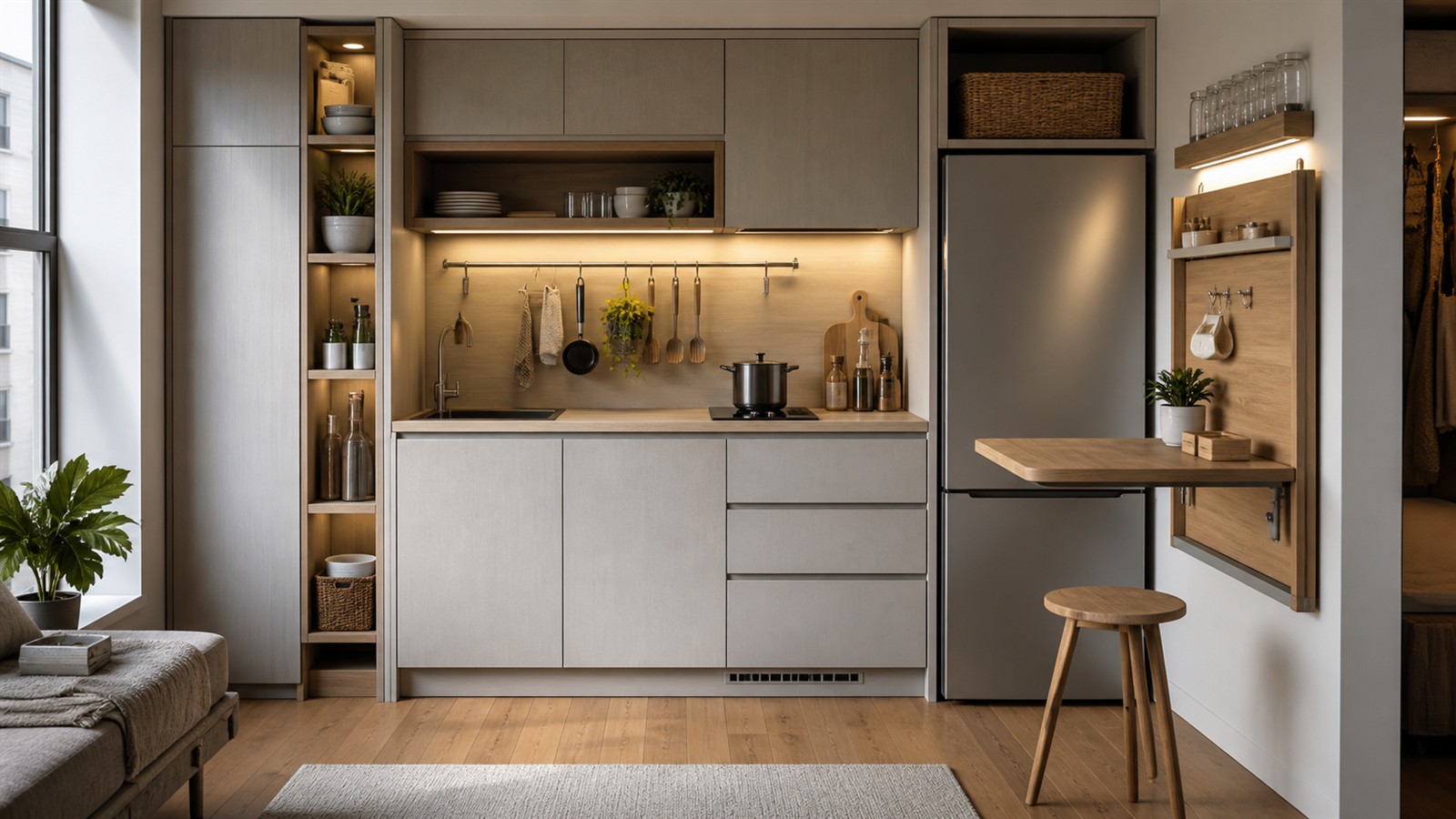
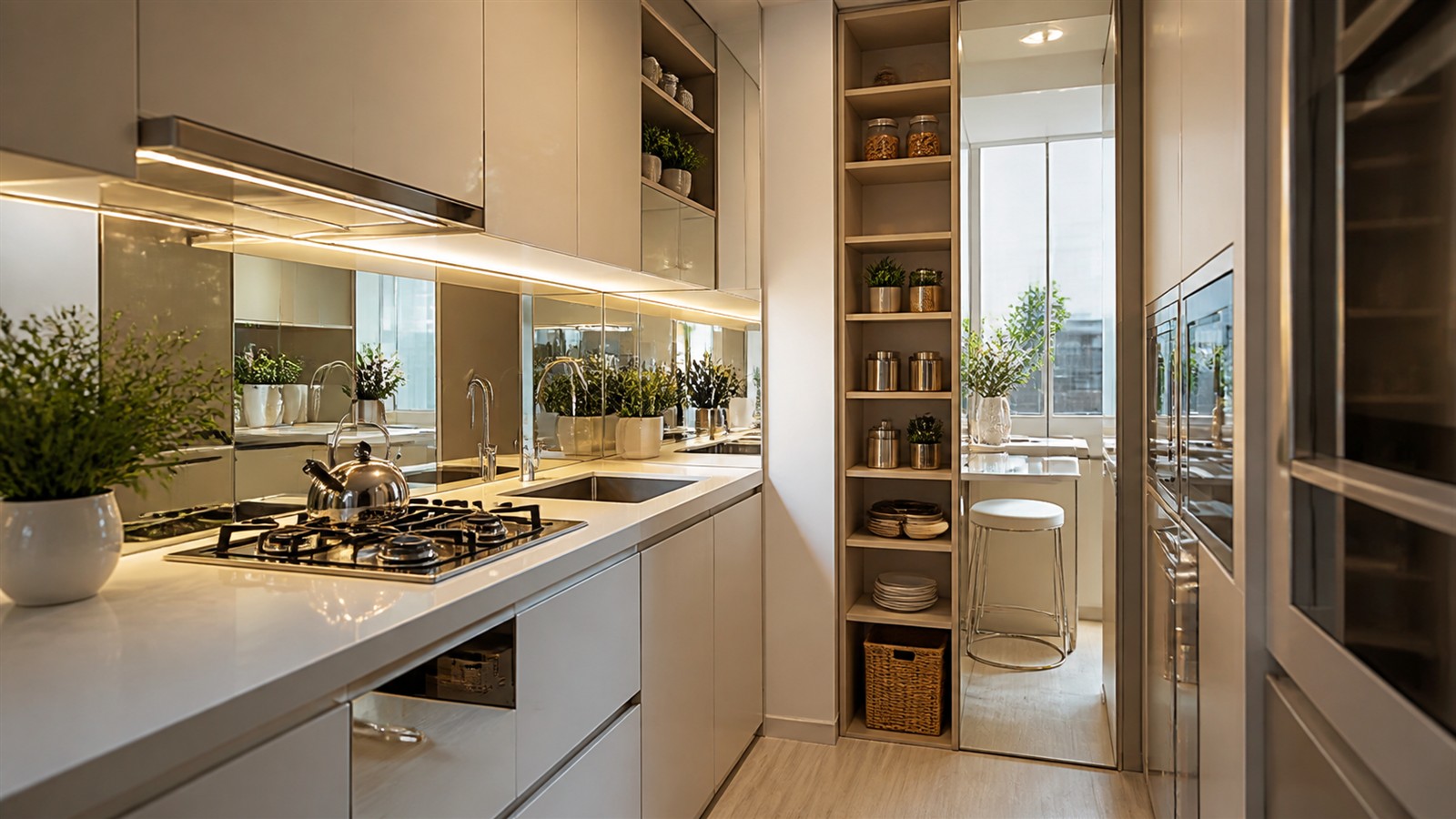
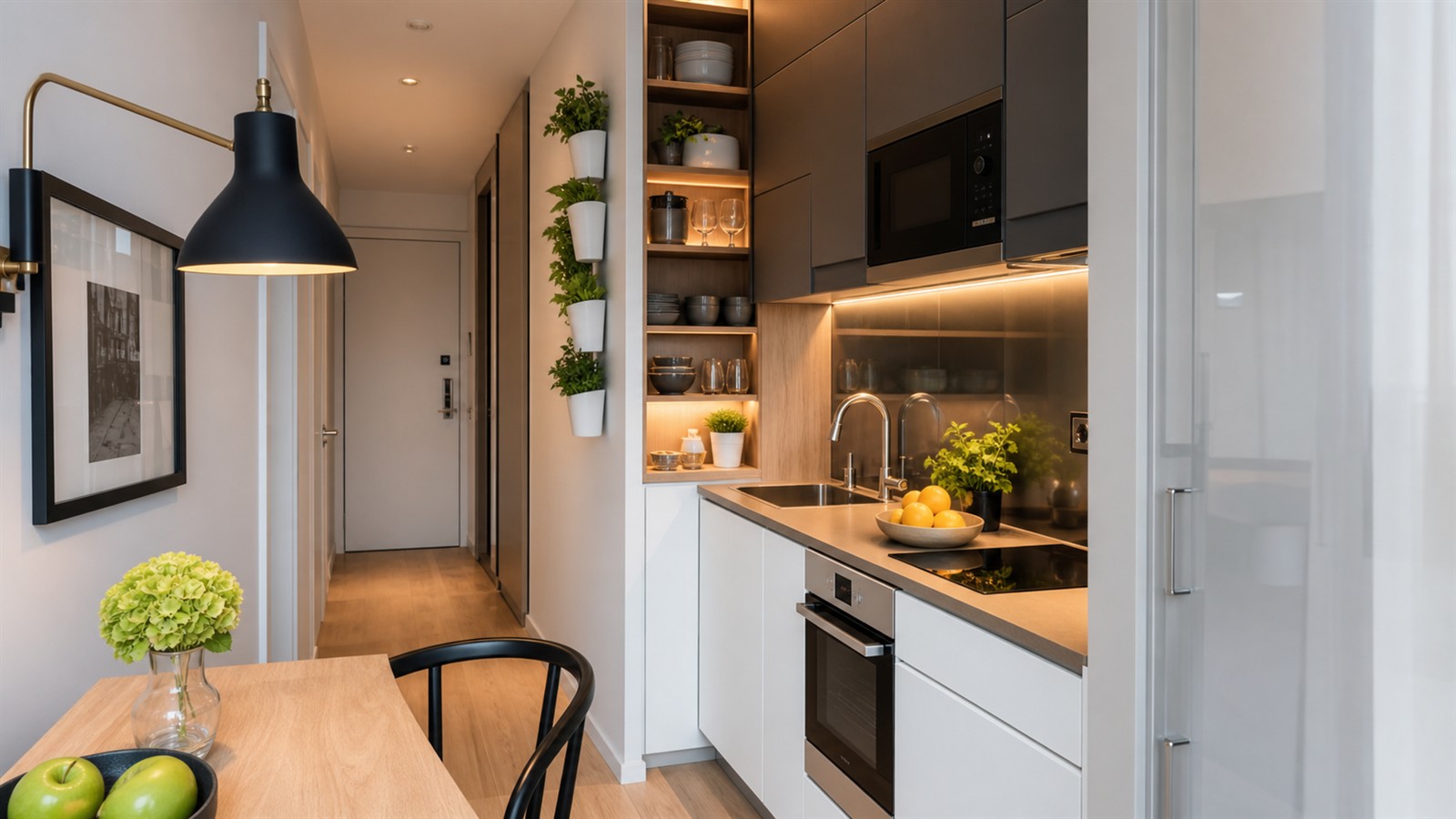
Many 50-square-foot kitchens work best as one-wall, galley, or compact L-shaped layouts. A one-wall kitchen keeps everything linear and can look elegant in a studio or small open room. A galley offers more counter and storage but needs enough aisle width to function. A tight L-shape can create a useful corner while preserving a small dining perch or rolling cart.
The best layout is the one that protects the work sequence. Refrigerator, sink, prep, and cooking should flow without requiring awkward turns or blocked doors. In a tiny kitchen, the sequence can be compressed, but it should not be chaotic. Even a short counter between sink and cooktop can make cooking feel dramatically easier.
Use Compact Appliances Strategically
Smaller appliances can unlock the room, but they should be chosen according to cooking habits rather than novelty. A narrow refrigerator may be perfect for an apartment cook who shops often. A two-burner cooktop can free counter space for someone who rarely uses four burners at once. A drawer dishwasher or slim dishwasher can improve cleanup without taking over the base cabinets.
Appliance finish also affects style. Integrated or panel-ready pieces help a tiny kitchen read as cabinetry instead of machinery. Stainless steel can work well, but too many exposed appliance faces may make the room feel busy. In very small kitchens, visual quiet is a form of luxury.
Go Vertical with Discipline
Vertical storage is essential, but it has to be edited. Tall cabinets, ceiling-height uppers, rails, hooks, and high shelves can add capacity without expanding the footprint. The danger is creating a wall so packed that the room feels like a storage closet. Mix closed storage with a few open moments, and keep the most frequently used items between shoulder and knee height.
Use the highest shelves for seasonal pieces, bulk goods, or rarely used serving items. Daily cookware should stay easy to reach. A step stool can be useful, but a kitchen that requires climbing for every meal will quickly become irritating.
Protect Counter Space Like a Precious Material
Counter space is often the scarcest resource in a tiny kitchen. Keep it clear by assigning homes to appliances, utensils, oils, and dish-drying tools. A wall-mounted magnetic strip, narrow shelf, or pull-out cutting board can help, but the best solution is usually better cabinet planning. If every object has to live on the counter, the storage plan is not finished.
Consider a sink cover, induction burner cover, or rolling cart only if it fits the way you cook. Multi-use surfaces are valuable when they are easy to deploy and store. If a clever accessory takes effort every time, it may become clutter instead of a solution.
Make Style Concentrated, Not Crowded
Small kitchens can handle personality, but it should be concentrated. A beautiful tile backsplash, a rich cabinet color, a brass rail, or a dramatic stone-look counter can make the room feel designed. Using all of those at once may overwhelm the footprint. Choose one leading style move and let supporting finishes stay calm.
Color can be powerful in 50 square feet. Light colors expand the room visually, but dark or saturated cabinets can also work when lighting is strong and surfaces are simple. The key is confidence and restraint. A tiny kitchen looks more expensive when it has a clear point of view.
Improve Light from Every Angle
Lighting can rescue a small kitchen from feeling tight. Under-cabinet lights brighten the work surface without taking space. A small ceiling fixture, recessed light, or track head can fill shadows. If there is a window, keep treatments minimal so daylight reaches the back of the room. Reflective tile, pale counters, and glass cabinet inserts can help light travel.
Avoid relying on one overhead bulb. It will cast shadows exactly where hands are chopping, washing, or reading labels. Layered lighting makes the kitchen safer, more functional, and more polished, even when the footprint is tiny.
Use Corners and Gaps Intelligently
Small kitchens often contain narrow gaps that seem useless until they are planned. A pull-out spice rack, tray divider, broom slot, or vertical sheet-pan cabinet can turn a few inches into daily convenience. Corners can hold lazy Susans, blind-corner pull-outs, or open shelves, depending on budget and access.
Do not fill every gap just because storage is possible. Some breathing room may be needed for handles, ventilation, or visual relief. The goal is not maximum stuff. The goal is maximum usefulness.
Edit Possessions Alongside the Design
A stylish 50-square-foot kitchen depends partly on owning the right amount of kitchen gear. Duplicate pans, rarely used gadgets, oversized sets, and mismatched containers consume space faster than most people expect. Before finalizing storage, sort the items that truly support daily cooking. The layout can only do so much if the room is asked to hold a full suburban kitchen’s inventory.
When possessions and design work together, a tiny kitchen can feel surprisingly generous. It may not have long counter runs or a giant island, but it can have clarity, beauty, and excellent function. In a small footprint, wow comes from intention that shows in every inch.
Make the Entry View Count
Small kitchens are often seen immediately from a doorway, hallway, or living area. That first view shapes how large and stylish the room feels. A clean cabinet run, a bright backsplash, a handsome light fixture, or a neatly framed shelf can make the kitchen feel deliberate. A view dominated by trash, drying dishes, or appliance cords can make the same square footage feel smaller.
Choose what the eye should land on first. In a compact kitchen, one strong focal point is usually enough. It might be a tile wall, a warm wood shelf, a beautiful faucet, or a crisp cabinet color. Everything around it should support that moment rather than compete with it.
Use Custom Thinking Even on a Modest Budget
Not every small kitchen needs custom cabinetry, but every small kitchen benefits from custom thinking. Fillers, toe kicks, side panels, shelf heights, and handle projections matter more when space is tight. Even stock cabinets can be planned carefully, with organizers chosen for the items actually owned. The goal is to avoid awkward leftovers: a gap too narrow to clean, a cabinet too deep to use, or a shelf too tall for daily dishes.
Budget can be directed where it has the most impact. Better lighting, a well-sized sink, upgraded drawer hardware, or one excellent counter surface may improve daily life more than a luxury appliance that crowds the room. In 50 square feet, strategic spending is visible.
Keep the Kitchen Easy to Reset
A tiny kitchen can go from polished to chaotic in minutes, so the reset path matters. Trash should be easy to reach while prepping. Dish soap, towels, and cleaning spray should have a compact home. Dry goods should return to cabinets without rearranging half the shelf. If cleanup is physically awkward, clutter will stay out longer.
Designing for reset also makes the kitchen more enjoyable. Clear counters invite cooking. Empty sinks make the room feel larger. Closed cabinet doors restore the visual order that small spaces depend on. Style lasts when the room can return to calm quickly.
Choose a Sink That Fits the Scale
The sink can make or break a 50-square-foot kitchen. An oversized basin may seem luxurious, but it can steal the only useful stretch of counter. A tiny bar sink may save space but frustrate anyone washing pans or produce. The best choice is usually a practical single bowl with a faucet that moves well and accessories that genuinely support the way the kitchen is used.
Drainboard space should be planned, too. A drying mat that lives permanently on the counter can erase precious prep room. A roll-up rack, wall-mounted dish storage, or compact dishwasher may keep the sink area more flexible. In small kitchens, water-related tasks deserve the same attention as cooking.
Let Hardware Stay Slim
Handles, knobs, and pulls seem minor until every inch matters. Large projections can catch clothing, narrow an aisle, or make a cabinet wall look choppy. Slim pulls, recessed channels, or small knobs can keep the room clean while still being comfortable to use. The right hardware also helps inexpensive cabinets look more considered.
Hardware finish should support the main style move. If the backsplash is bold, quiet hardware may be best. If the cabinetry is simple, a warmer metal can add polish without taking up any space at all.
Choose Fewer, Better Accessories
Accessories can either elevate a small kitchen or bury it. One well-placed rail, a compact utensil crock, or a beautiful cutting board can add warmth. Several competing organizers can make the room feel like a storage aisle. Before buying a solution, decide exactly what problem it solves and where it will live when not in use.
This is where restraint becomes stylish. A 50-square-foot kitchen looks larger when the useful objects are carefully chosen and the rest are hidden. The layout then feels intentional rather than merely full. A small room can carry strong personality when the practical layer is edited with the same care as the decorative layer.
That discipline is what makes guests notice the design before they notice the size. When the room feels complete, compactness becomes part of its charm rather than an apology. The layout feels small by choice, not small by compromise, and every visible detail has a practical reason in daily use.