Clever Design Tricks to Make a Tiny Kitchen Feel Twice the Size
A tiny kitchen does not have to announce its limits the moment you step into it. With the right design choices, the room can feel brighter, calmer, and much more generous than its square footage suggests. The best tricks are not gimmicks. They are small spatial decisions that reduce visual noise, stretch light, protect counter space, and make storage feel effortless. When cabinetry, appliances, color, hardware, and lighting all work toward the same goal, a compact kitchen can feel crisp and intentional rather than squeezed. The reward is a room that cooks efficiently and looks larger because nothing is fighting the footprint.
A: Low-contrast palettes usually help most, whether they are white, pale wood, soft gray, or muted color.
A: They can, but reflective surfaces should face order and light rather than clutter or harsh bulbs.
A: A few edited shelves can lighten a wall, but crowded shelves make the kitchen feel smaller.
A: Not always. Larger tile or slab surfaces can reduce grout lines and make walls feel calmer.
A: Counter-depth refrigeration often makes the biggest difference because it affects the main sightline.
A: Clear permanent objects, improve task lighting, and protect one uninterrupted prep stretch.
A: Yes, if lighting is strong and surrounding surfaces keep the room from feeling boxed in.
A: Vertical dividers and shallow pull-outs often improve access without adding visual weight.
A: No. Satin or gently reflective finishes often brighten the room with less glare.
A: Closed storage, clear counters, warm lighting, and fewer visible finish changes.
Begin with What the Eye Notices First
Small kitchens often feel cramped because the first view is broken into too many pieces. A dark appliance side, a cluttered counter, a busy backsplash, and several competing cabinet lines can make the room seem smaller before anyone uses it. Start by choosing one clean focal direction. The eye should move easily across the room instead of stopping at every handle, object, and edge.
This may mean aligning cabinet fronts, simplifying hardware, or keeping the main counter clear. It can also mean moving a microwave off the most visible shelf or replacing a bulky freestanding piece with built-in storage. A tiny kitchen feels larger when the first impression is orderly.
Use Light as a Spatial Material
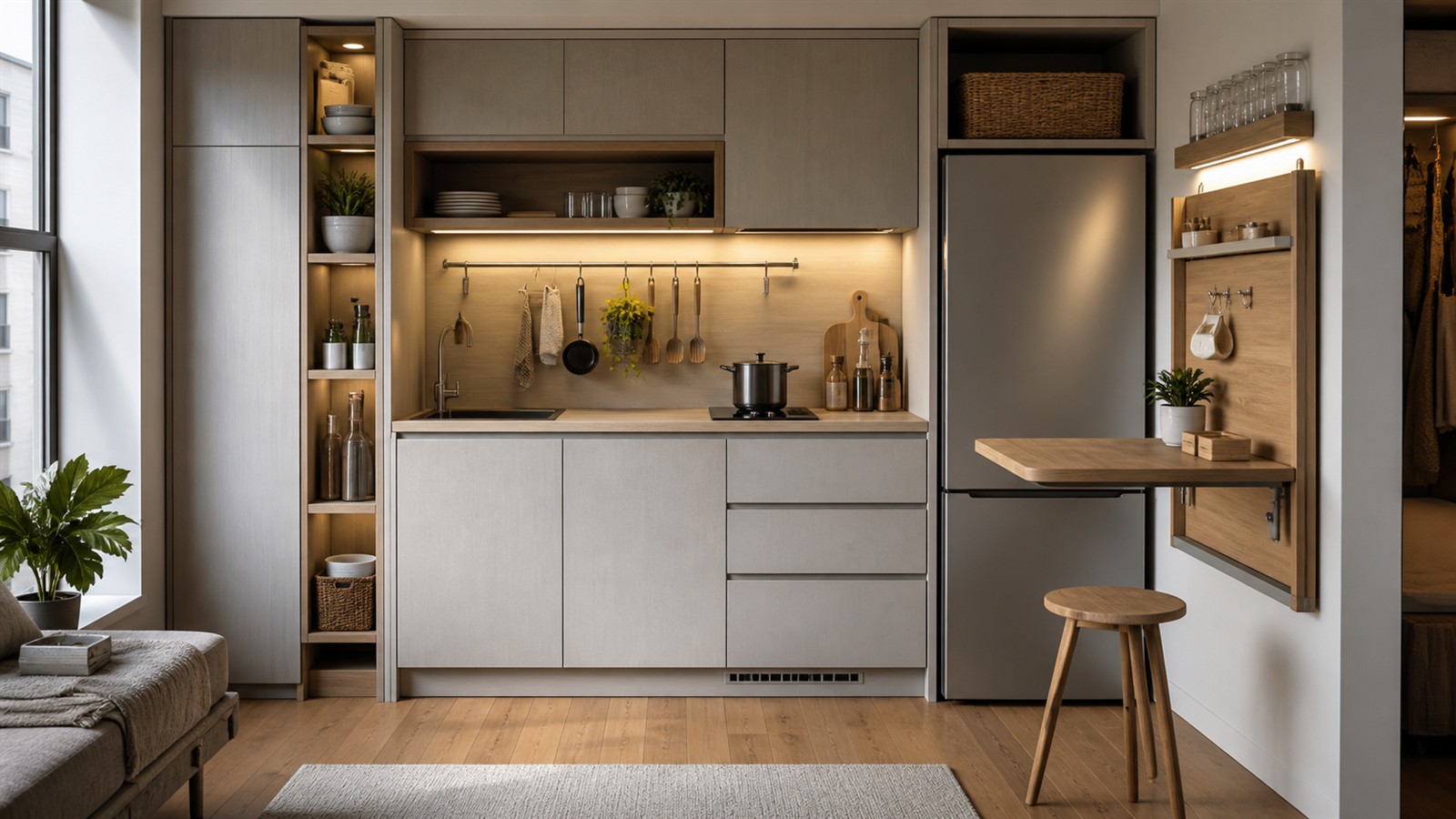
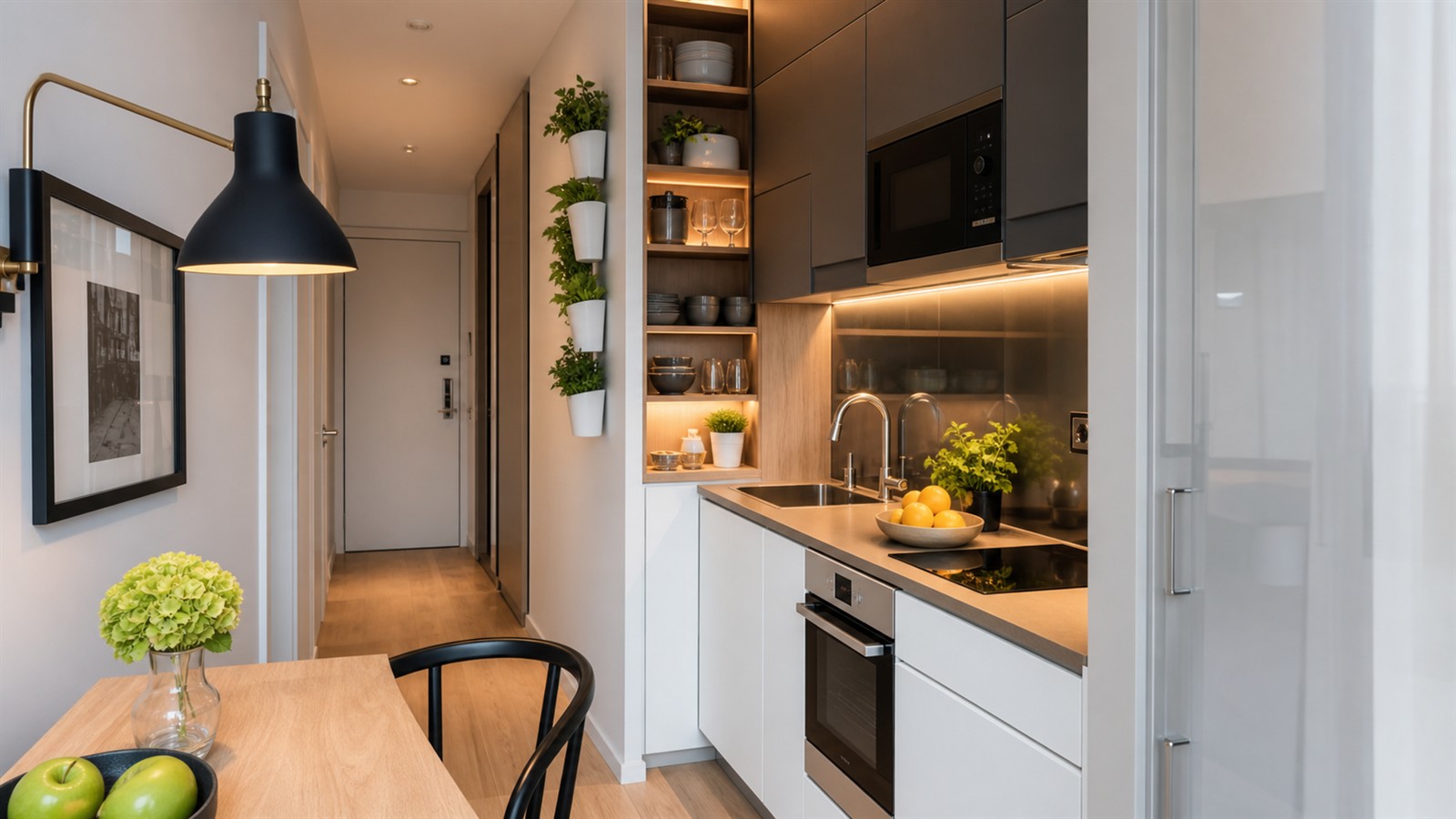
Light is one of the most powerful tools in a small kitchen because it changes how edges are perceived. Under-cabinet lighting removes shadows from work surfaces. A brighter ceiling fixture lifts the whole room. A pale backsplash can bounce daylight farther than a dark matte wall. These choices do not add inches, but they make the existing inches easier to see and use.
Layered lighting matters more than raw brightness. One harsh overhead light can flatten the room and create shadows where hands work. A combination of task lighting, soft ambient light, and a small decorative fixture gives the kitchen depth. Depth is what helps a tiny room stop feeling like a box.
Choose Cabinet Color with the Whole Room in Mind
White is not the only answer for a tiny kitchen. Light colors can expand the room, but muted greens, soft taupes, pale woods, and even carefully chosen dark tones can work if the surfaces around them are balanced. The question is not whether the color is light or dark. The question is whether it makes the cabinetry feel calm, continuous, and intentional.
In very small kitchens, contrast should be used carefully. Strong contrast between upper cabinets, lower cabinets, appliances, counters, and backsplash can chop the room into pieces. A lower-contrast palette lets the boundaries blur, which often makes the kitchen feel wider and taller.
Stretch Vertical Lines
Vertical lines guide the eye upward, which makes a compact kitchen feel taller. Ceiling-height cabinets, narrow tile stacks, slim pantry doors, and vertical paneling can all help. Even a simple rail mounted higher on the wall can make the room feel more lifted when it is not overloaded with objects.
The trick is restraint. Too many vertical elements can become busy, especially when every hook is filled. Use height to create elegance, not a storage wall that looks anxious. Keep the most visible vertical surfaces tidy and let the uppermost storage handle items used less often.
Reduce Countertop Interruptions
A tiny kitchen depends on the counter feeling available. Every object left out becomes part of the room’s architecture, whether it deserves that role or not. Coffee gear, utensils, dish racks, oils, cutting boards, and mail can quickly make the kitchen feel half its size. Countertop discipline is one of the simplest ways to visually double the room.
This does not require a bare, unfriendly kitchen. One attractive object can stay out if it earns its place. The rest should have homes in drawers, pull-outs, or appliance garages. A clear counter line tells the eye that the room has more working space than expected.
Scale Appliances to the Footprint
Oversized appliances can make a small kitchen feel like it was designed around machines rather than people. A counter-depth refrigerator, compact dishwasher, narrow range, or two-burner cooktop may give back valuable inches. The best appliance choices match actual cooking habits instead of copying a full-size kitchen checklist.
Appliance fronts also affect perceived size. Panel-ready or low-contrast finishes can help the kitchen read as one continuous composition. Shiny stainless appliances can still work, but too many reflective blocks in a tiny room may feel choppy. The goal is useful equipment that does not dominate the view.
Make Storage Feel Built In
Freestanding racks and carts are tempting in small kitchens, but too many of them make the room feel temporary. Built-in storage, even when created with stock cabinets and careful trim, usually feels calmer. Fillers, side panels, toe kicks, and aligned cabinet tops can make a modest kitchen look custom.
If a cart or open rack is necessary, give it a precise role and a permanent place. It should not drift around the room collecting overflow. Tiny kitchens feel bigger when storage looks planned, not improvised after the cabinets ran out.
Use Reflection Without Creating Glare
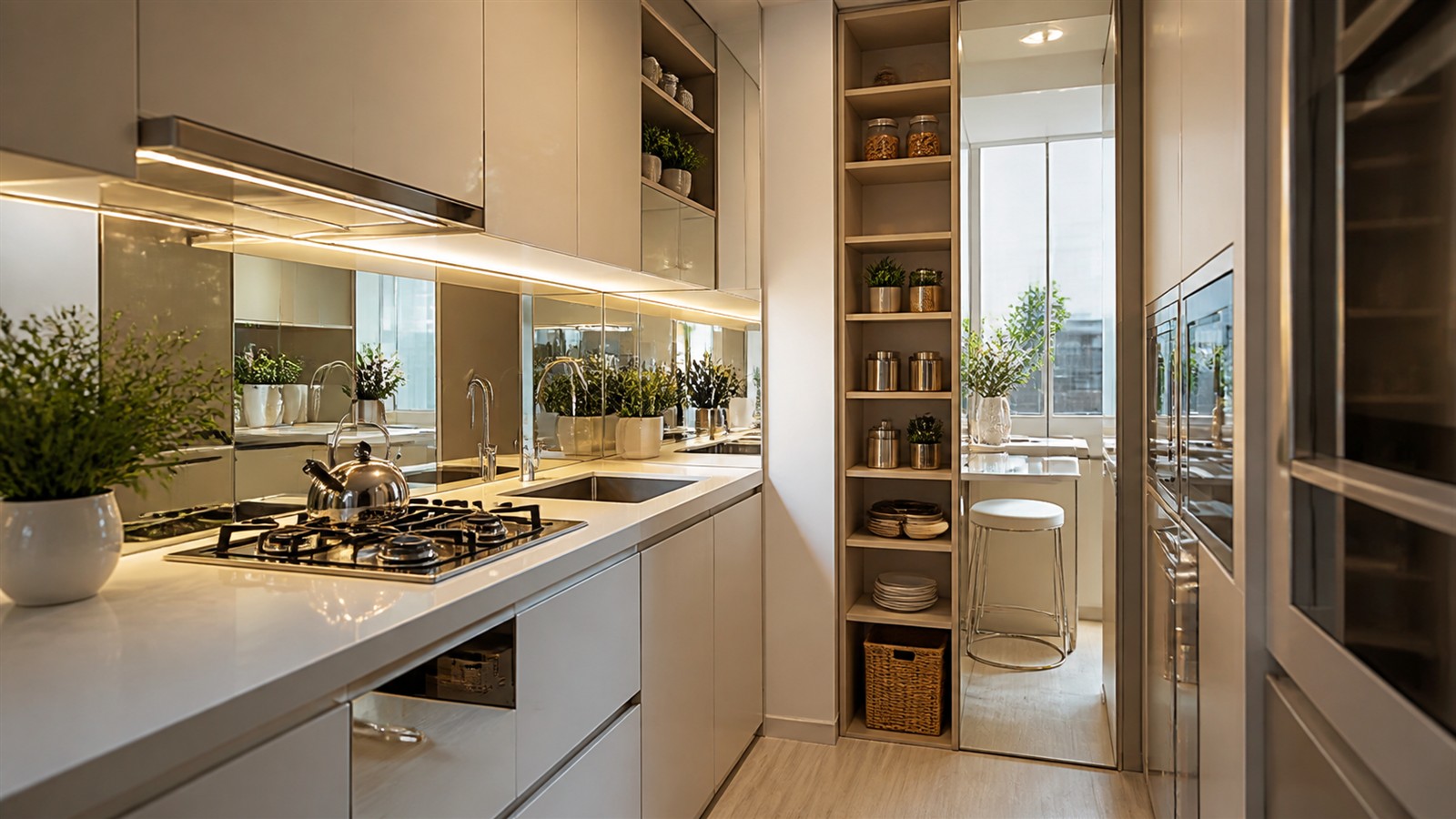
Mirrors, glossy tile, glass cabinet inserts, polished stone, and satin paint can all help move light around a small kitchen. Reflection works best in controlled doses. A reflective backsplash behind a tidy counter can expand the room. A shiny surface behind clutter simply doubles the clutter.
Test reflective materials in both daylight and evening light. Some finishes look elegant in the morning but harsh under bulbs at night. A tiny kitchen needs softness as much as brightness, especially when it opens to another room.
Let Flooring Simplify the Footprint
Flooring can either connect a tiny kitchen to the surrounding space or make it feel like a small patch. Continuous flooring often makes apartments and compact homes feel larger. If the kitchen floor must change for durability, choose a transition that looks deliberate and does not create a hard visual stop.
Large-format tile, simple grout lines, and floorboards running in the longer direction can all support the illusion of space. Busy floors may be charming, but they need calm cabinetry and counters above them. The smaller the kitchen, the more each surface affects the whole.
Hide Depth Where You Can
Shallow storage can be more useful than deep storage in a tiny kitchen. Narrow shelves, slim pantry pull-outs, and shallow upper cabinets keep items visible and reduce the need to unpack a whole shelf. They also prevent bulky cabinetry from crowding the room physically and visually.
Depth should be reserved for things that truly need it: pots, bowls, appliances, and trash pull-outs. When everything else can live in shallower zones, the kitchen feels less heavy. That lighter feeling contributes directly to the impression of size.
Keep the Reset Easy
A tiny kitchen can look twice as large when it resets quickly after use. That means the trash is near prep, dish storage is near cleanup, and cleaning supplies are easy to reach. If every reset requires rearranging cabinets, the room will spend most of its life looking crowded.
Design tricks work best when they are supported by habits. Clear the main counter, close the cabinet doors, tuck away the drying rack, and let the lighting do its work. A tiny kitchen that can return to calm in five minutes will feel larger every day, not only when it is photographed.
Make Door Swings Disappear
Door swings are easy to overlook until they interrupt every movement in a tiny kitchen. Cabinet doors, refrigerator doors, dishwasher fronts, and even the room entry can all compete for the same small patch of floor. Where possible, use drawers, sliding mechanisms, pocket doors, or narrower appliance doors to keep movement cleaner. A kitchen feels larger when nothing has to be dodged before it can be used.
This is especially important near corners. A cabinet that opens into an appliance handle or blocks the sink may technically provide storage, but it will feel irritating every day. Good small-kitchen design treats swing space as part of the layout, not empty air that can be borrowed later.
Let the Backsplash Do Quiet Work
The backsplash is one of the largest visible surfaces in many tiny kitchens, so it has a disproportionate effect on perceived size. A slab backsplash, vertically stacked tile, or soft reflective surface can make the wall feel taller and cleaner. Busy pattern can work, but only when the rest of the kitchen is unusually restrained.
Think about grout as part of the design. High-contrast grout creates a grid that can shrink the wall visually. Lower-contrast grout lets tile read as a broader surface. In a tiny kitchen, that broader reading often feels more spacious and more polished.
Use Furniture Edges Carefully
If the kitchen opens to a dining nook or living area, nearby furniture can either help or hurt the illusion of space. A bulky table pushed against the kitchen edge makes the room feel crowded. A slim table, bench, or rounded chair profile can keep the transition soft. The kitchen feels larger when adjacent furniture respects its working clearances.
Furniture color matters too. Pieces that relate to cabinet or floor tones can visually extend the room. Strongly contrasting pieces may be beautiful, but they should be placed where they do not chop up the only open area beside the kitchen.
Edit the Upper Wall
The upper wall is prime visual territory. Filling it with cabinets, shelves, hooks, art, rails, and appliances can make a tiny kitchen feel top-heavy. Instead, decide which upper-wall elements truly earn their place. Some kitchens need full uppers for storage. Others feel larger with one open section, a lighter hood, or a short shelf near the window.
The goal is balance. Too little upper storage can push clutter to the counter. Too much can press down on the room. A tiny kitchen feels twice the size when the upper wall stores what it must and leaves the rest visually lighter.
Design the Room for Standing Still
Small kitchens are often evaluated by storage numbers, but they are experienced by a person standing in one spot. There should be a comfortable place to chop, rinse, stir, and set something down. If the room has one strong standing position with tools, light, and counter space nearby, it will feel more capable than a larger kitchen with scattered functions.
This standing-still test is simple: imagine making dinner without constantly stepping aside, closing a door, or moving an object. Every choice that reduces that friction makes the kitchen feel bigger. The room may remain tiny, but it stops feeling like it is resisting the cook.
Finish with Fewer Decisions
The final trick is restraint. A tiny kitchen feels larger when the design stops before every surface has been decorated, optimized, or filled. Leave a little blank wall, a little open counter, and a little breathing room inside storage. Those pauses make the clever details easier to notice and the whole room easier to live with.