Granite vs Quartz Countertops: Which Is Better for Modern Kitchens?
Granite and quartz are often compared as if one must be universally better, but modern kitchens are more nuanced than that. Granite offers natural variation, heat tolerance, and a sense of permanence that many homeowners still love. Quartz offers consistency, low maintenance, and a wide design range that fits clean-lined kitchens beautifully. The right choice depends on how the kitchen is used, how much care the household wants to give the surface, and what kind of visual character the room needs. Instead of asking which material wins everywhere, compare where each one performs best.
A: Granite usually handles heat better, though trivets are still smart on any countertop.
A: Quartz is usually easier because it does not require sealing.
A: Some granite can stain if unsealed, while dense properly sealed granite can be very forgiving.
A: Some patterns do, but high-quality quartz in the right setting can look refined and convincing.
A: Pricing overlaps, so compare the exact slab or product with fabrication included.
A: Both can be good when the color, pattern, and installation suit the home.
A: Yes, especially with cleaner patterns, simple edges, and restrained cabinetry.
A: Yes, high heat can damage resin-based quartz, so protection is important.
A: Patterned granite or softly patterned quartz usually hides crumbs better than flat white surfaces.
A: Choose quartz for low maintenance, or granite if heat tolerance and natural stone matter more.
What Granite Brings to a Modern Kitchen
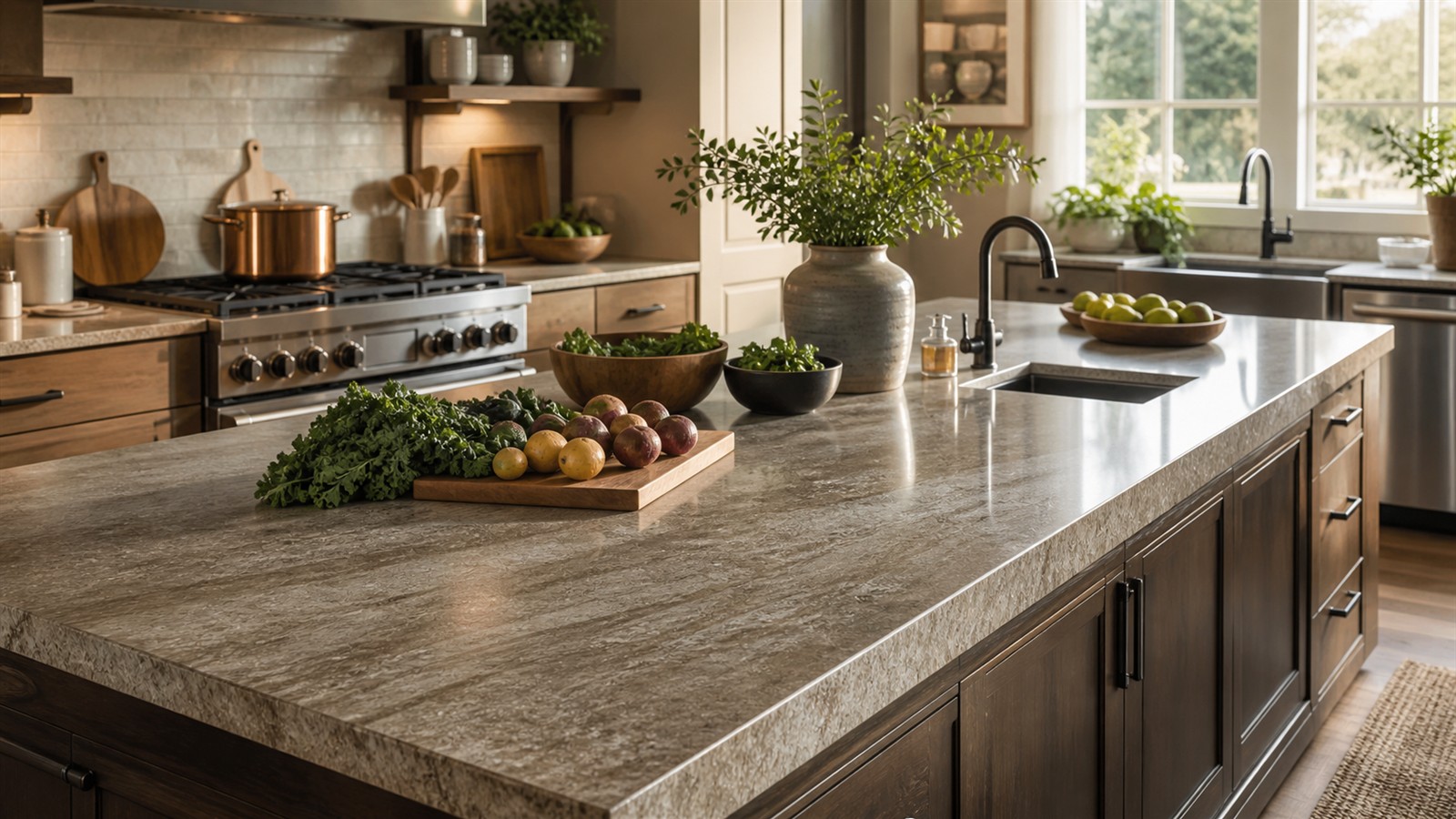
Granite is a natural stone, which means every slab is different. That individuality can give a modern kitchen depth and authenticity, especially when the rest of the room has simple cabinets and restrained hardware. A granite counter can keep a minimalist kitchen from feeling flat because the movement and mineral variation are built into the material.
Granite also has a long track record. It can handle heat better than many resin-based surfaces, and it often stands up well to everyday cooking when sealed properly. For homeowners who like natural materials and do not mind some variation, granite remains a serious contender.
What Quartz Brings to a Modern Kitchen
Quartz is engineered from mineral content, pigments, and resin, giving it a more controlled look than natural stone. That consistency is one reason it works so well in modern kitchens. Designers can choose a quiet white, a soft gray, a concrete-inspired tone, or a dramatic veined pattern without hunting through slabs for the right natural movement.
Quartz is also appealing because it does not require sealing. For busy households, that low-maintenance quality is a major advantage. It resists many common stains and usually cleans easily after daily meals. In a kitchen designed for speed and order, quartz can feel like the more practical choice.
Compare Maintenance Honestly
Granite usually needs sealing, though the frequency depends on the stone and product used. Some granite is dense and forgiving, while other slabs are more porous. If sealing sounds like a small and acceptable task, granite maintenance may not be a problem. If any recurring maintenance feels like too much, quartz has the advantage.
Quartz still needs care. It should not be treated as indestructible, and harsh cleaners or high heat can create problems. The difference is that quartz asks for fewer stone-specific rituals. For many modern kitchens, that simplicity is part of its appeal.
Think About Heat and Cooking Style
Granite generally tolerates heat better than quartz, which can be damaged by very hot pans because of the resin content. Serious cooks who move hot cookware quickly may appreciate granite’s resilience. Even so, trivets are wise on any counter because thermal shock, sealers, and finish treatments can complicate broad claims.
Quartz works well for most everyday cooking when homeowners use basic protection. The question is not whether quartz can survive a normal kitchen. It can. The question is whether the household wants to think about heat protection consistently. If not, granite may feel more forgiving.
Compare Stain Resistance
Quartz usually has the edge in stain resistance because it is nonporous when properly manufactured. Coffee, wine, oil, and tomato sauce are less likely to penetrate quickly. This makes quartz attractive for families, entertainers, and anyone who wants cleanup to be straightforward.
Granite’s stain resistance depends on the slab and sealer. Many granites perform very well, but they are not all identical. A dense dark granite may be extremely forgiving, while a lighter or more porous stone may need more attention. Testing a sample is better than relying on category reputation.
Look at Pattern and Authenticity
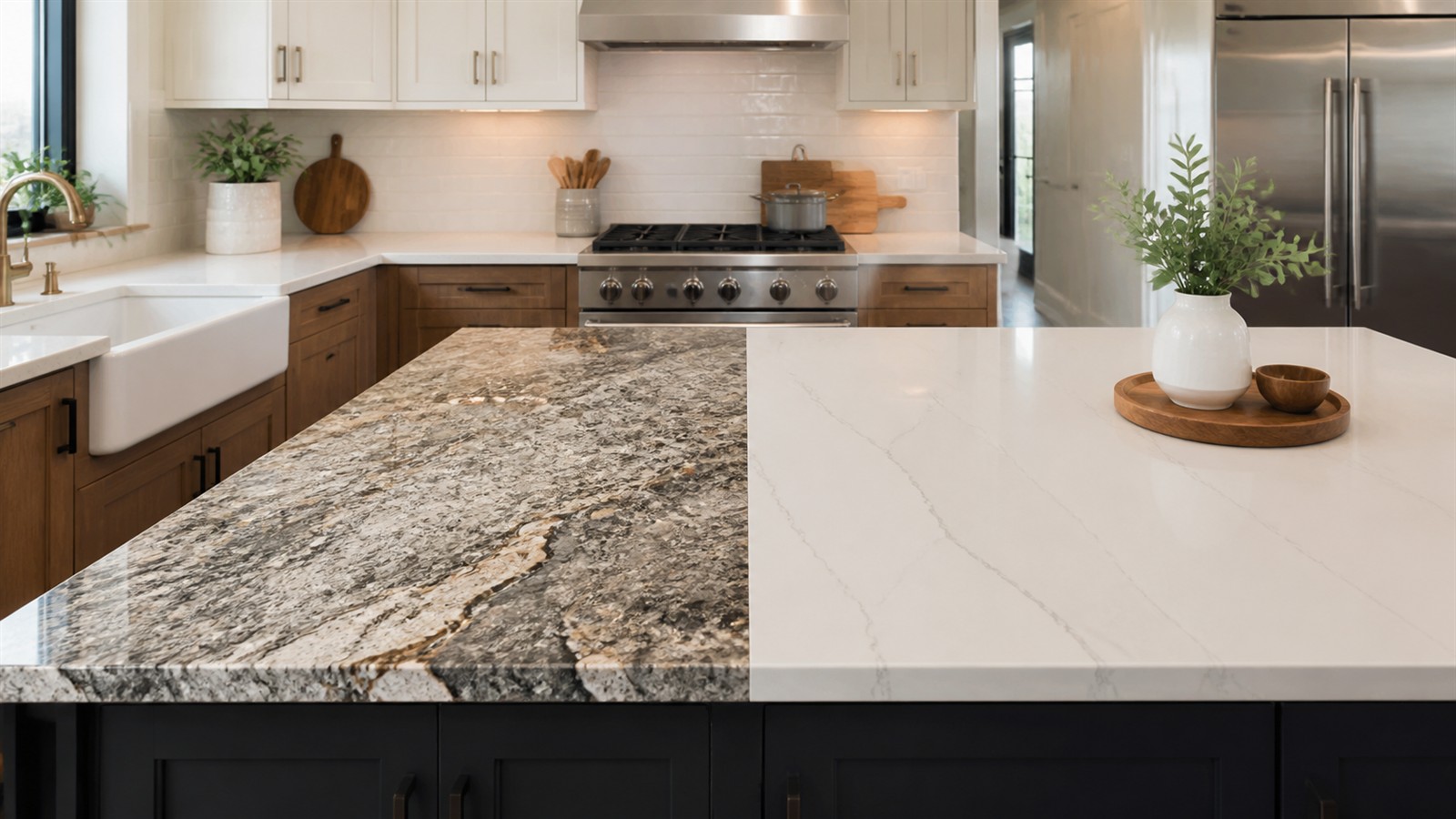
Granite’s pattern is natural, so it has randomness that engineered materials can struggle to imitate. Some slabs are quiet and speckled; others are dramatic and flowing. This variation can either be a selling point or a challenge. Homeowners who want a one-of-a-kind kitchen may prefer granite immediately.
Quartz offers more predictability. That can be perfect in modern design, where clean lines and controlled palettes matter. The risk is choosing a quartz pattern that looks too repetitive or printed at full scale. Larger samples and showroom slabs help reveal whether the design will feel convincing.
Consider Color Range
Quartz usually offers a broader controlled color range, especially for clean whites, soft taupes, concrete looks, and subtle veining. This makes it easy to coordinate with modern cabinets and backsplashes. If the design calls for a very specific undertone, quartz may be easier to specify.
Granite colors depend on what nature provides. That can be limiting, but it can also lead to richer combinations. A granite with unexpected mineral flecks may connect cabinet hardware, flooring, and wall color in a way a flat engineered surface cannot.
Evaluate Seams in Each Material
Seams matter in both granite and quartz. Granite seams can be more or less noticeable depending on pattern movement and slab layout. Quartz seams may be easier to control in quiet patterns, but bold quartz veining still requires careful planning. No material automatically eliminates the need for a skilled fabricator.
Modern kitchens often include large islands, which makes seam planning especially important. Ask to see the slab or quartz layout before fabrication. A good fabricator can align decisions with the visual priorities of the room.
Think About Resale Expectations
Both granite and quartz are familiar to buyers, but they send slightly different messages. Granite often reads as natural, established, and substantial. Quartz often reads as updated, clean, and low-maintenance. In many markets, either can support resale if the color and installation are tasteful.
The risky choice is not granite or quartz; it is an extreme pattern or color that fights the rest of the home. A modern kitchen should feel current without becoming so specific that future buyers see only a replacement project.
Compare Cost Beyond Averages
Granite and quartz pricing overlaps. Entry-level granite may cost less than premium quartz, while rare granite can exceed many engineered options. Fabrication, edge details, sink cutouts, slab yield, and installation conditions can change the final price as much as the material category.
Get quotes for the actual slabs or products being considered. Broad price assumptions can mislead. A simple quartz in a complex kitchen may cost more than expected, while a well-chosen granite remnant or standard slab may be surprisingly competitive.
Match the Material to Cabinet Style
Quartz often pairs naturally with slab doors, flat panels, minimal hardware, and understated backsplashes. It supports kitchens where the cabinet geometry is the main design feature. Granite can also work in modern rooms, especially when the pattern is selected carefully and the surrounding details stay crisp.
The key is contrast control. A busy granite with busy cabinets can feel dated. A stark quartz with cold cabinets can feel sterile. Either material can succeed when it balances the rest of the palette.
Decide How You Want the Counter to Age
Granite may develop character through use, sealing cycles, and subtle changes in finish. Quartz tends to preserve a more consistent appearance until it is damaged. Some people prefer a material that shows a natural history. Others want the counter to look as close to new as possible for as long as possible.
That emotional preference matters. A countertop is touched and seen constantly. If natural variation feels grounding, granite may be more satisfying. If consistency feels calming, quartz may be the better daily companion.
Choose by Priority, Not Hype
For heat tolerance and natural uniqueness, granite often has the stronger case. For low maintenance and controlled modern styling, quartz often leads. For stain resistance, quartz usually wins; for natural authenticity, granite wins. For cost, the answer depends on the specific product and fabrication.
The better material is the one whose strengths match the kitchen’s real priorities. A modern kitchen can look beautiful with either surface. The most successful choice is the one that supports cooking habits, visual goals, and maintenance expectations without pretending tradeoffs do not exist.
Look at Finish Options
Granite and quartz both come in different finishes, and finish can change the personality of the counter. Polished granite feels classic and reflective, while honed or leathered granite can look softer and more contemporary. Quartz may come in polished, matte, or concrete-like finishes that suit modern cabinetry in different ways.
Finish affects maintenance perception too. Matte surfaces may hide glare but show fingerprints or oils. Polished surfaces may brighten the room but reveal smudges. View finish samples in the actual kitchen lighting before assuming one will be easier to live with.
Consider Sustainability Questions
Sustainability is not simple in the granite-versus-quartz debate. Granite is natural but quarried and shipped, sometimes over long distances. Quartz uses abundant mineral content but also resins and manufacturing energy. The better environmental choice may depend on source location, supplier practices, durability, and how long the counter remains in service.
Ask suppliers where materials come from and whether recycled content, responsible quarrying, or low-emission manufacturing information is available. The greenest countertop is often one that performs well, avoids premature replacement, and fits the home long enough to stay out of the waste stream.
Compare Tactile Experience
Countertops are visual, but they are also physical. Granite often feels cool, dense, and stone-like in a way many people enjoy. Quartz can feel smooth, consistent, and slightly warmer depending on finish. These tactile differences matter because counters are touched constantly while cooking, cleaning, leaning, and serving.
Spend time with samples rather than only looking at them. Run your hand across polished, honed, leathered, and matte options. A surface that feels good in daily use may be more satisfying than one that wins only in photographs.
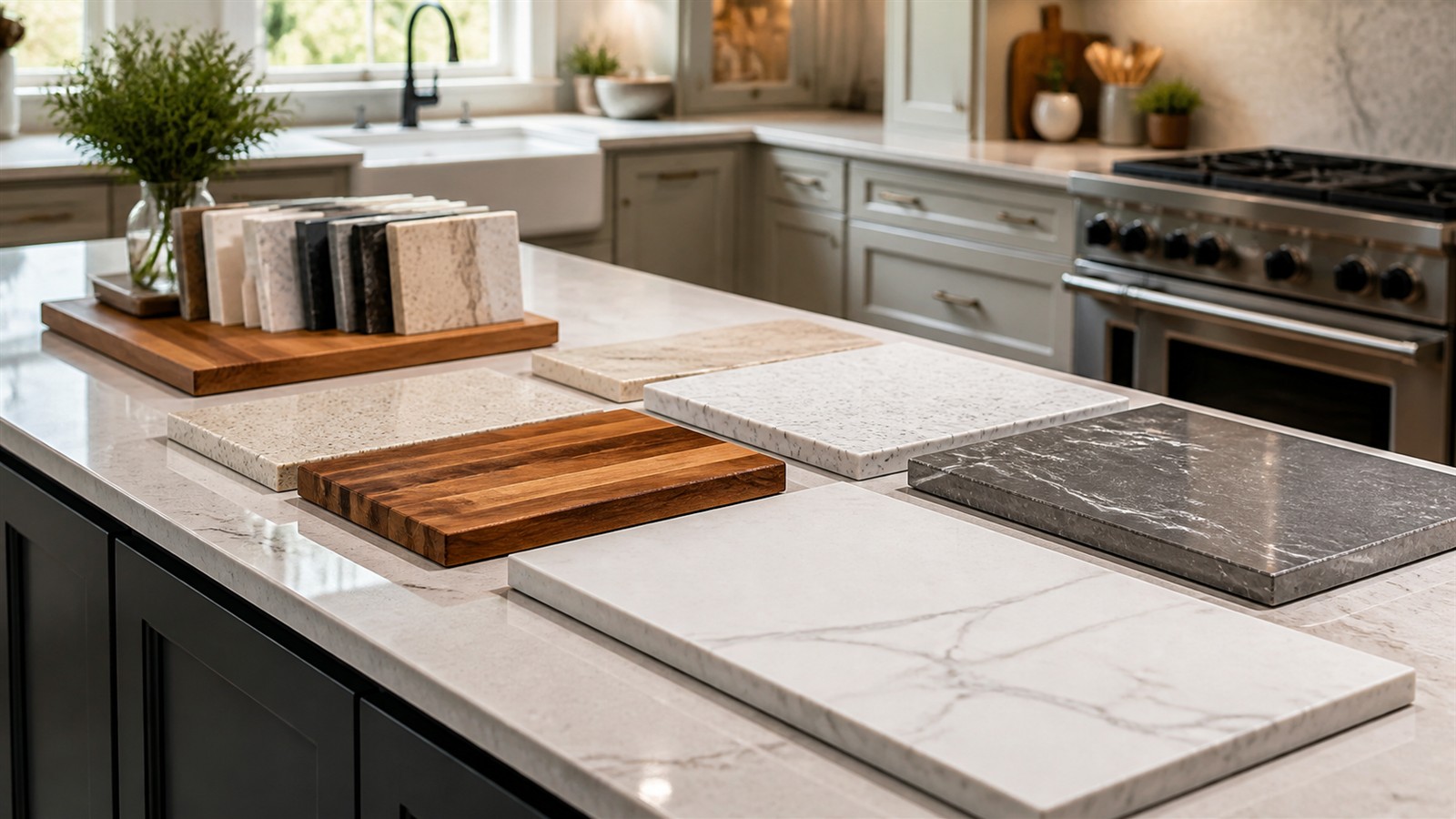
Use Samples Like Test Surfaces
A countertop sample should be treated like a small experiment. Put coffee, oil, lemon juice, tomato sauce, turmeric, and water on it if the supplier allows. Try wiping it after a few minutes and again after a longer pause. This kind of practical test often reveals more than sales language.
Also test visibility. Place crumbs, flour, and a water glass on the sample. Some patterns hide daily mess; others magnify it. The best modern kitchen counter is not just durable in theory. It is forgiving in the exact ways your household needs.
Ask About Fabricator Preference
Fabricators often have strong opinions because they see which materials install cleanly and which ones create problems. Some may prefer granite for certain edge details, while others may have deep experience with quartz seams and waterfall panels. Their advice should not replace your design goals, but it can prevent expensive surprises.
Ask what they would choose for your specific layout and why. A long island, undermount sink, heavy overhang, or tight stair delivery can influence the recommendation. Granite versus quartz is partly a material choice and partly an installation choice.
Make the Final Choice in the Room
The final decision should happen with the kitchen palette in view. Put the granite or quartz sample beside cabinet doors, flooring, backsplash options, hardware, and paint. Look at the combination in daylight and at night. Modern kitchens depend on restraint, and the counter must support that restraint.
If both choices still seem strong, return to lifestyle. Choose granite if natural variation and heat tolerance make daily use feel better. Choose quartz if easy cleaning and visual consistency matter more. A confident choice comes from knowing which tradeoff you are choosing, not from pretending there is no tradeoff.