The Ultimate Guide to Choosing the Best Kitchen Countertop Material
The best kitchen countertop material is not the same for every home. A serious cook, a busy family, a low-maintenance renovator, and a design-focused homeowner may all need different surfaces. Countertops carry the visual weight of the kitchen, but they also take the daily punishment of water, heat, knives, spills, groceries, homework, and cleanup. Choosing well means looking beyond the prettiest sample. The right material should fit how the kitchen is used, how much maintenance the household will actually do, and how the counter needs to look beside cabinets, flooring, lighting, and backsplash.
A: Quartz is often one of the easiest because it resists stains and does not require sealing.
A: Not if you accept etching and patina; it is a poor match for people who want a flawless surface.
A: Yes, when each material has a clear role and the colors relate well.
A: Porcelain, sintered surfaces, and some natural stones usually tolerate heat better than resin-based materials.
A: They can be, with proper sealing, cleaning, and realistic placement away from constant standing water.
A: Material, slab yield, fabrication complexity, edge choice, cutouts, and installation conditions all matter.
A: They do not need to match, but undertones should agree so the kitchen feels intentional.
A: Durable, neutral quartz or attractive natural stone usually has broad appeal.
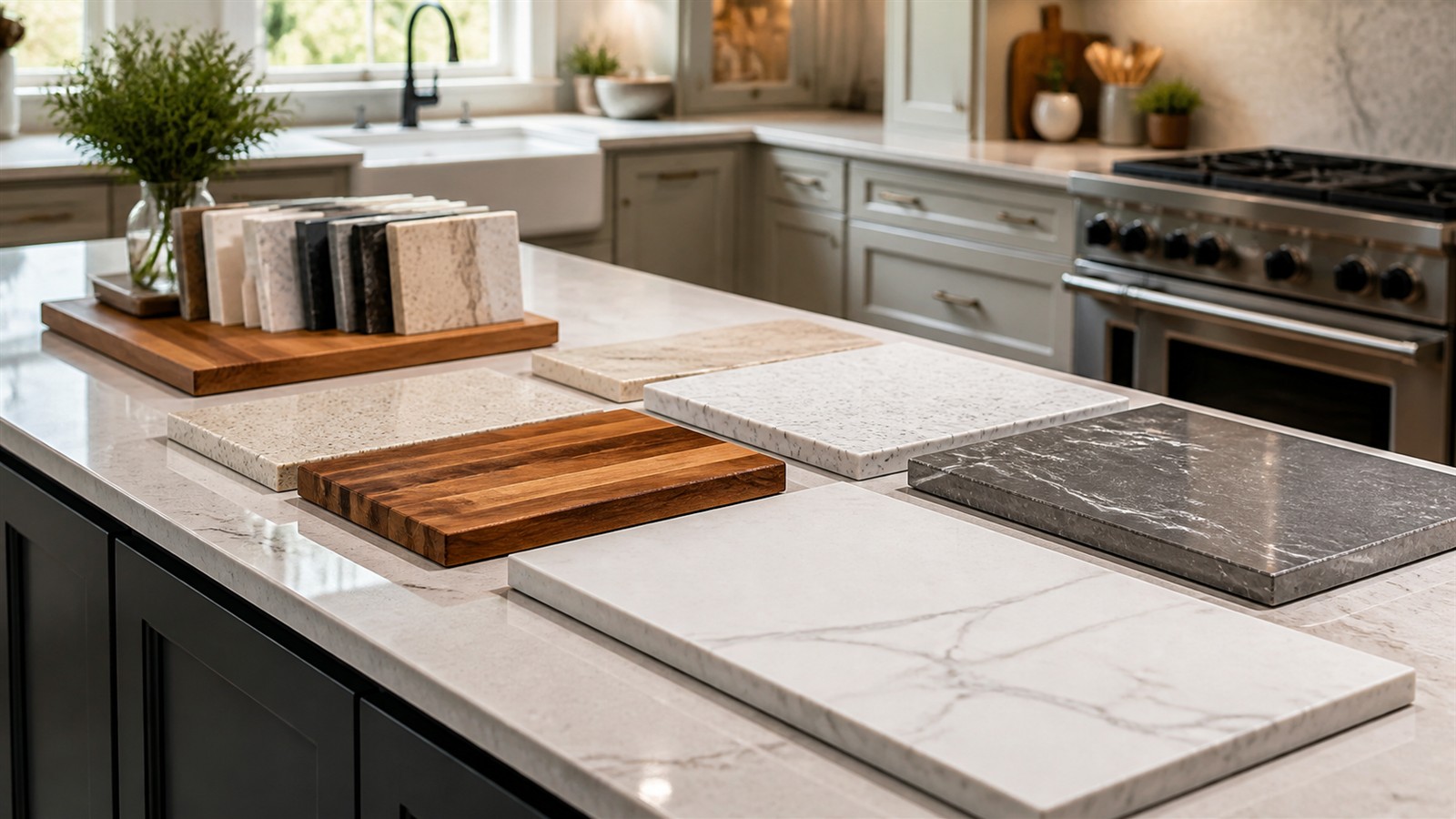
A: View the largest possible piece at home beside cabinets, floors, and lighting.
A: The best one fits your cooking habits, maintenance tolerance, budget, and design goals.
Start with Daily Behavior
Countertop decisions become easier when they begin with real habits instead of showroom preferences. Think about how often the kitchen is used, whether meals are cooked from scratch, how quickly spills are wiped, and whether children or guests use the island casually. A surface that looks perfect in a sample tray may not suit a household that leaves lemon juice, coffee, oil, or hot pans on the counter.
Be honest about maintenance tolerance. Some homeowners enjoy sealing stone, wiping carefully, and accepting patina. Others want a surface that can be cleaned quickly after dinner without special attention. Neither approach is wrong, but pretending to be more careful than you are usually leads to disappointment.
Understand Natural Stone
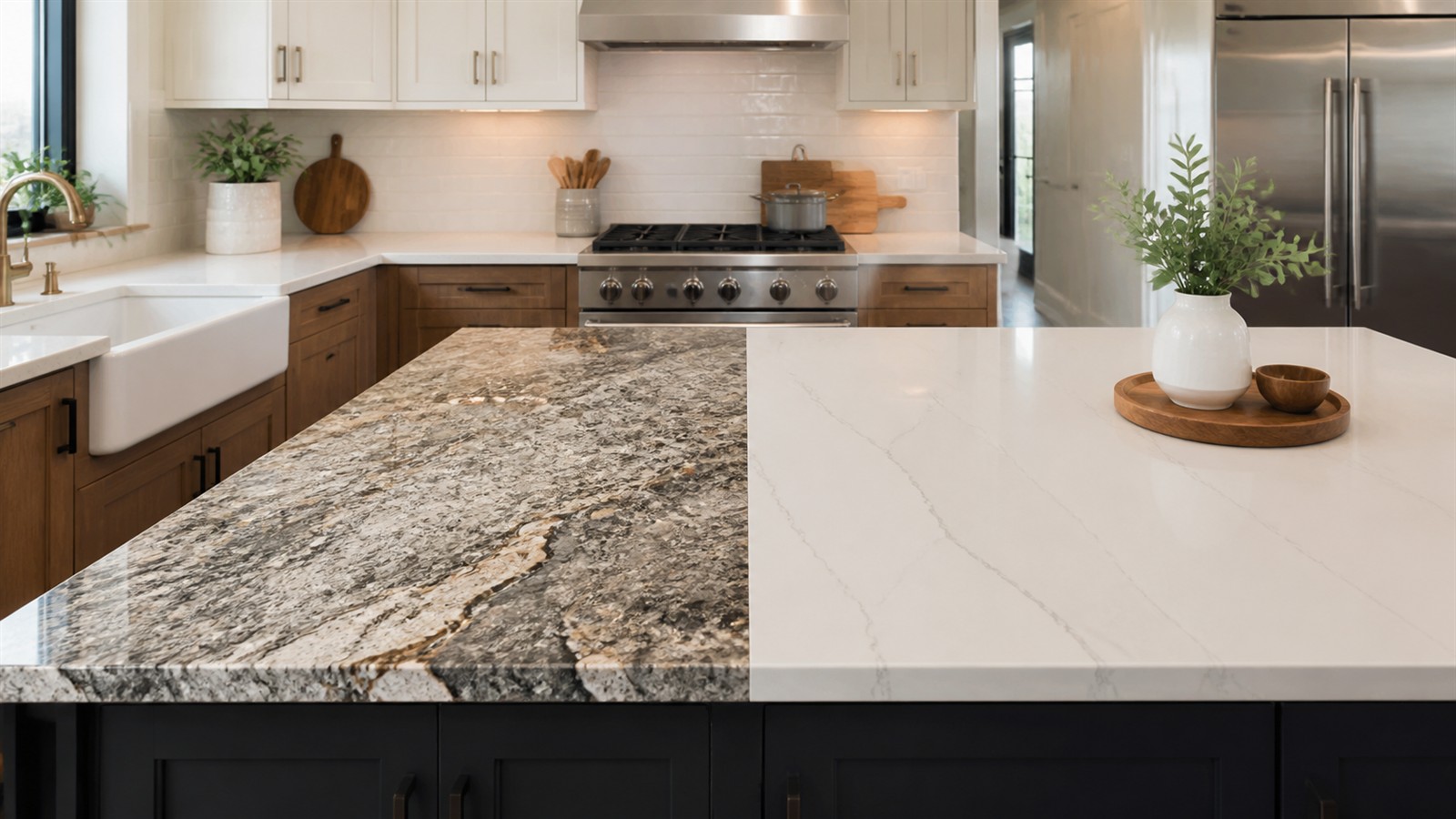
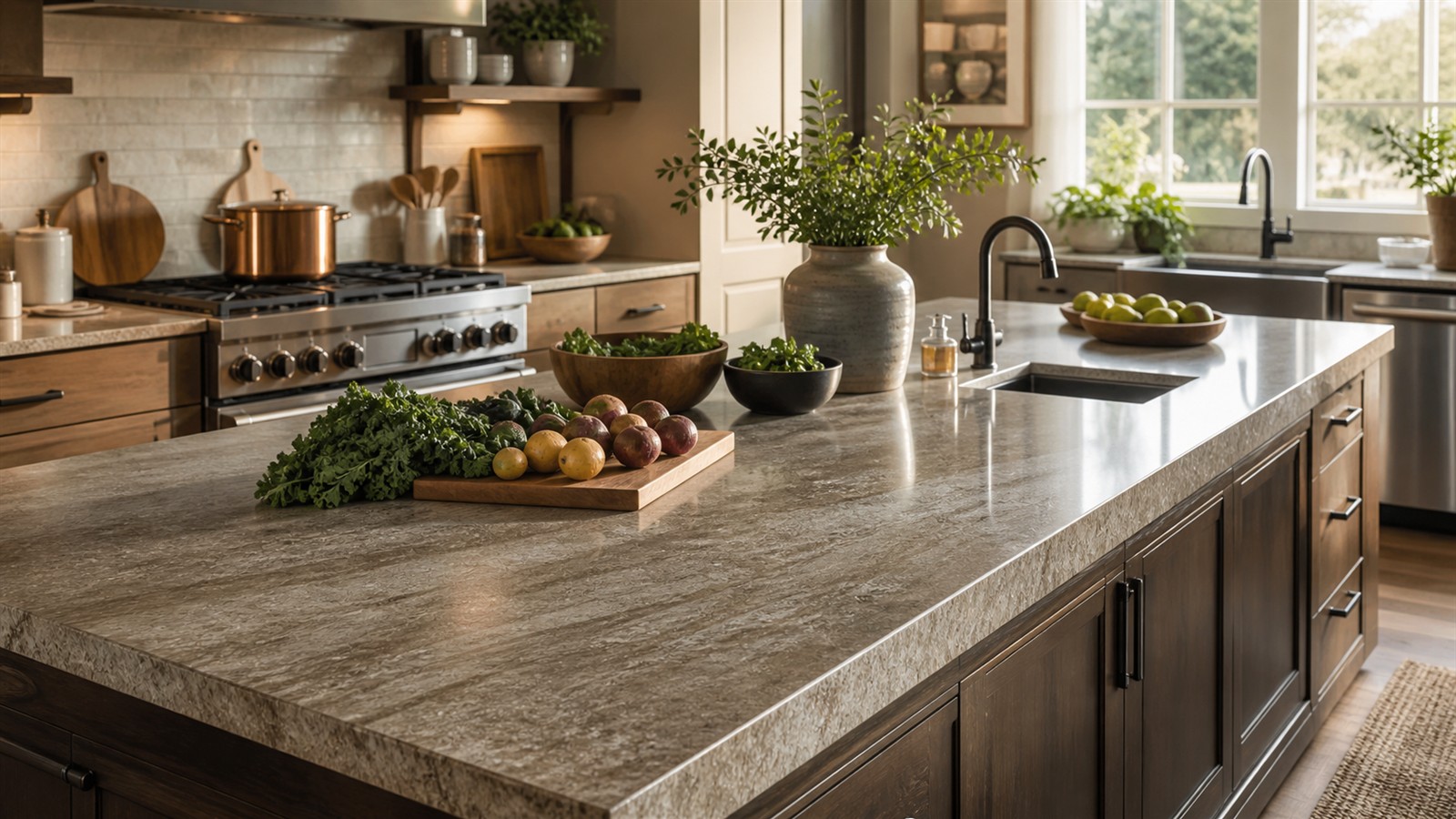
Granite, marble, quartzite, soapstone, and other stones bring natural variation that engineered materials cannot fully duplicate. Each slab has its own movement, mineral pattern, and color depth. That uniqueness can make a kitchen feel rich and permanent, especially when the stone is chosen in person rather than from a tiny sample.
Natural stone also asks for knowledge. Some stones are porous, some etch, some stain, and some need periodic sealing. Quartzite is often harder than marble, while soapstone darkens and develops character. The material should be chosen for its actual properties, not only for the name used in a showroom.
Consider Quartz for Predictable Performance
Engineered quartz is popular because it offers consistency, strong stain resistance, and a wide range of colors. It works well for households that want the stone look without the uncertainty of natural variation. Because quartz does not need sealing, it often appeals to people who want a polished kitchen with fewer maintenance rituals.
Quartz is not indestructible. It can be damaged by excessive heat, and some designs look more convincing than others. Very bright white quartz may show crumbs or seams, while heavily patterned quartz can feel artificial if the repeat is obvious. Quality and fabrication matter as much as the category.
Look at Porcelain and Sintered Surfaces
Porcelain and sintered slabs have become strong contenders for modern kitchens. They can resist heat, stains, UV exposure, and scratching better than many traditional surfaces. They are especially useful when a homeowner wants a thin profile, dramatic veining, or a counter that can coordinate with wall cladding.
These materials require skilled fabrication. Edges, seams, and installation details can affect the final look. Because the pattern may be printed on the surface rather than running through the slab, edge treatment should be discussed before ordering. In the right hands, porcelain can look sleek and perform beautifully.
Do Not Dismiss Solid Surface
Solid surface materials are sometimes overlooked because they lack the prestige of stone, but they solve practical problems. They can be repaired, formed with integrated sinks, and installed with inconspicuous seams. For certain modern, healthcare-inspired, rental, or family kitchens, that smoothness is a real advantage.
The tradeoff is heat and scratch sensitivity. Solid surface counters need cutting boards and trivets. They are not the best match for someone who wants the hardest possible surface. They are a good match for someone who values repairability, seamless shapes, and a softer feel under hand.
Use Wood Where Warmth Matters
Butcher block and wood countertops bring warmth that stone and quartz rarely match. They can soften white cabinets, make a kitchen feel more handcrafted, and create a pleasant prep surface when maintained correctly. Wood is especially appealing on islands, baking zones, or secondary counters where warmth matters more than stain resistance.
Wood needs care. Water around sinks, hot pans, and heavy staining foods can mark it. Some people love the patina; others see every mark as damage. Before choosing wood, decide whether the counter is meant to stay pristine or age visibly. That expectation makes all the difference.
Match Material to Zone
One kitchen can use more than one countertop material. A durable quartz perimeter and a wood island can balance maintenance with warmth. A dramatic stone island and quieter perimeter counters can control cost while giving the room a focal point. A baking area may benefit from stone, while a serving area may benefit from wood or solid surface.
Mixed materials should have a reason. Random contrast can make the kitchen feel patched together. The best combinations assign each material a job and repeat enough color or undertone to make the room feel unified.
Compare Heat and Stain Resistance
Heat resistance is often misunderstood. Some materials tolerate brief warmth, while others can crack, scorch, discolor, or suffer resin damage under high heat. Serious cooks should ask direct questions about hot pans, slow cookers, air fryers, and baking sheets. A beautiful counter is frustrating if it requires constant fear around normal cooking.
Stain resistance matters just as much. Coffee, wine, turmeric, tomato sauce, oil, and citrus can all test a counter. Samples should be tested at home when possible. Seeing how a material reacts to real ingredients is more useful than relying on broad category claims.
Think About Edge Profiles and Thickness
The same material can look traditional, modern, heavy, or delicate depending on edge profile and thickness. A thick mitered edge can make an island feel substantial. A simple eased edge can look clean and timeless. Ornate edges may suit classic cabinetry but feel out of place in a minimalist kitchen.
Edges also affect comfort and durability. Sharp-looking profiles may chip more easily or feel less forgiving in tight kitchens. Rounded or eased details can be more practical for families. The edge should match the architecture and the way people move around the counter.
Budget Beyond the Slab
Countertop cost includes more than material price. Template work, fabrication, edge details, sink cutouts, backsplash pieces, delivery, installation, support brackets, and removal of old counters can all affect the final number. A material that looks affordable per square foot may rise quickly with complex fabrication.
Budget should also include longevity. A cheaper surface that needs replacement sooner may not be the best value. A premium surface that requires maintenance a household will ignore may also be a poor investment. Value comes from fit, not just price.
Coordinate with Cabinets and Light
Countertops sit horizontally, so they catch light differently from cabinet doors and backsplash tile. A sample that looks warm under showroom lights may look gray at home. A dramatic pattern may feel elegant in daylight and busy under pendants. Always view samples in the actual kitchen, next to cabinet color and flooring.
Undertones are especially important. Cream cabinets, cool gray counters, warm floors, and blue-white backsplash tile can fight one another. The best countertop material supports the whole palette. It should not look like a separate decision dropped into the room at the end.
Plan for Cleaning Rituals
Every countertop has a cleaning personality. Some need gentle cleaners, some tolerate stronger products, and some show streaks unless wiped carefully. Families may prioritize easy disinfecting. Bakers may prioritize flour cleanup. Entertainers may prioritize stain resistance after wine, citrus, and oil sit out during a long evening.
Ask how the counter will look five minutes after dinner, not only on installation day. The right surface should support the household’s reset routine. When cleaning feels natural, the counter stays beautiful with less effort.
Choose Confidence Over Perfection
No countertop material is perfect. The goal is to choose the tradeoffs that fit the kitchen honestly. Natural stone offers depth and uniqueness. Quartz offers consistency and ease. Porcelain offers performance and modern profiles. Wood offers warmth. Solid surface offers repairability and seamlessness.
Once the priorities are clear, the decision becomes less overwhelming. Choose the material that supports daily cooking, suits the design, fits the budget, and ages in a way the household can accept. That is the real definition of the best kitchen countertop material.
Think About Seams Before You Commit
Seams are part of countertop design, especially on large islands, long runs, and kitchens with corners. A material may look seamless in a showroom photo but require a visible joint in a real home. Patterned stone and bold veining make seam planning even more important because a poorly placed seam can interrupt the most beautiful part of the slab.
Ask the fabricator to explain seam locations before approving the template. Sometimes a slightly different slab layout, island size, or edge choice can make the seam less noticeable. This conversation is not a minor technical detail. It affects how finished the whole kitchen feels.
Account for Sink Style
The sink changes how a countertop performs. Undermount sinks create a clean look, but the cutout edge must be fabricated well and maintained carefully. Farmhouse sinks create a strong design statement, but they affect cabinet planning and counter support. Integrated sinks can be seamless, especially with solid surface materials, but they change the aesthetic completely.
Think about water behavior around the sink. Materials that stain, swell, or darken may be risky if the household leaves water sitting near the faucet. A counter that works beautifully on an island may not be the best material beside a busy cleanup sink.
Decide How Much Pattern You Can Live With
Countertop pattern has a major effect on the kitchen’s mood. Quiet patterns feel flexible and calm, while bold veining can become the room’s main event. Neither is better by default. The decision depends on cabinet style, backsplash plans, flooring, and how much visual energy the homeowner wants to see every day.
Large kitchens can often handle stronger movement because the pattern has room to breathe. Smaller kitchens may need a more restrained surface unless the counter is intentionally the star. Before choosing dramatic material, imagine it covered with groceries, dishes, and small appliances. Real life adds pattern too.
Compare Long-Term Repair Options
Some countertop materials can be repaired more gracefully than others. Solid surface can often be sanded or patched. Wood can be refinished. Natural stone may be filled or polished by a professional. Quartz and porcelain can be more difficult to repair invisibly, depending on the damage and pattern.
Repairability matters for long-term homeowners, rental properties, and families that expect heavy use. A material that resists damage is valuable, but a material that can recover from damage has a different kind of value. Consider both before deciding.
Visit Fabricators, Not Just Showrooms
A showroom helps with inspiration, but a fabricator helps with reality. Fabricators understand slab yield, seam placement, edge durability, support requirements, sink cutouts, and installation limits. They can often explain why one material is a better fit for a specific kitchen than another material that looks similar in a display.
Bring measurements, cabinet plans, sink choices, and photos of the kitchen when possible. The more context the fabricator has, the better the advice will be. Countertops are not just purchased; they are fabricated into the room. That craft step deserves attention.