Most Durable Countertops for Busy Family Kitchens
A busy family kitchen asks more from a countertop than a showroom ever will. The surface may handle breakfast spills, lunch packing, hot pans, craft projects, groceries, homework, pizza boxes, dropped utensils, and late-night cleanup all in the same week. Durability is not just hardness. It is the combination of stain resistance, heat tolerance, impact strength, cleanability, edge performance, and visual forgiveness. The best family countertop is one that keeps the kitchen looking calm while daily life happens on top of it. Choosing well means thinking about real use before falling for a perfect sample.
A: Quartz is often the easiest all-around choice, while granite, quartzite, and porcelain can also perform very well.
A: Granite, porcelain, and sintered surfaces usually handle heat better than quartz or solid surface.
A: Softly patterned mid-tone surfaces hide daily mess better than flat white or very dark counters.
A: Marble can work if etching and patina are accepted, but it is not the easiest family surface.
A: Yes, cutting boards protect both the counter finish and the knives.
A: Eased or softly rounded edges are usually more forgiving than sharp profiles.
A: It can perform well, but fabrication quality and edge detail are especially important.
A: It can, especially if the island takes heavier use or needs a warmer look.
A: Stain resistance, simple cleaning, no sealing, and visual forgiveness all help.
A: Try common spills, view crumbs on the surface, and check the sample in actual kitchen light.
Define Durability Broadly
A durable countertop is not only a surface that resists scratches. A family kitchen needs counters that tolerate spills, wipe clean quickly, handle repeated contact, and stay attractive even when life is busy. A material that is technically hard may still be frustrating if it stains easily or shows every crumb.
Think about the family’s actual pressure points. Some homes need resistance to tomato sauce and juice. Others need heat tolerance for sheet pans or impact resistance around an island where children climb onto stools. Durability should be defined around the household, not only around product claims.
Quartz Is the Low-Maintenance Favorite
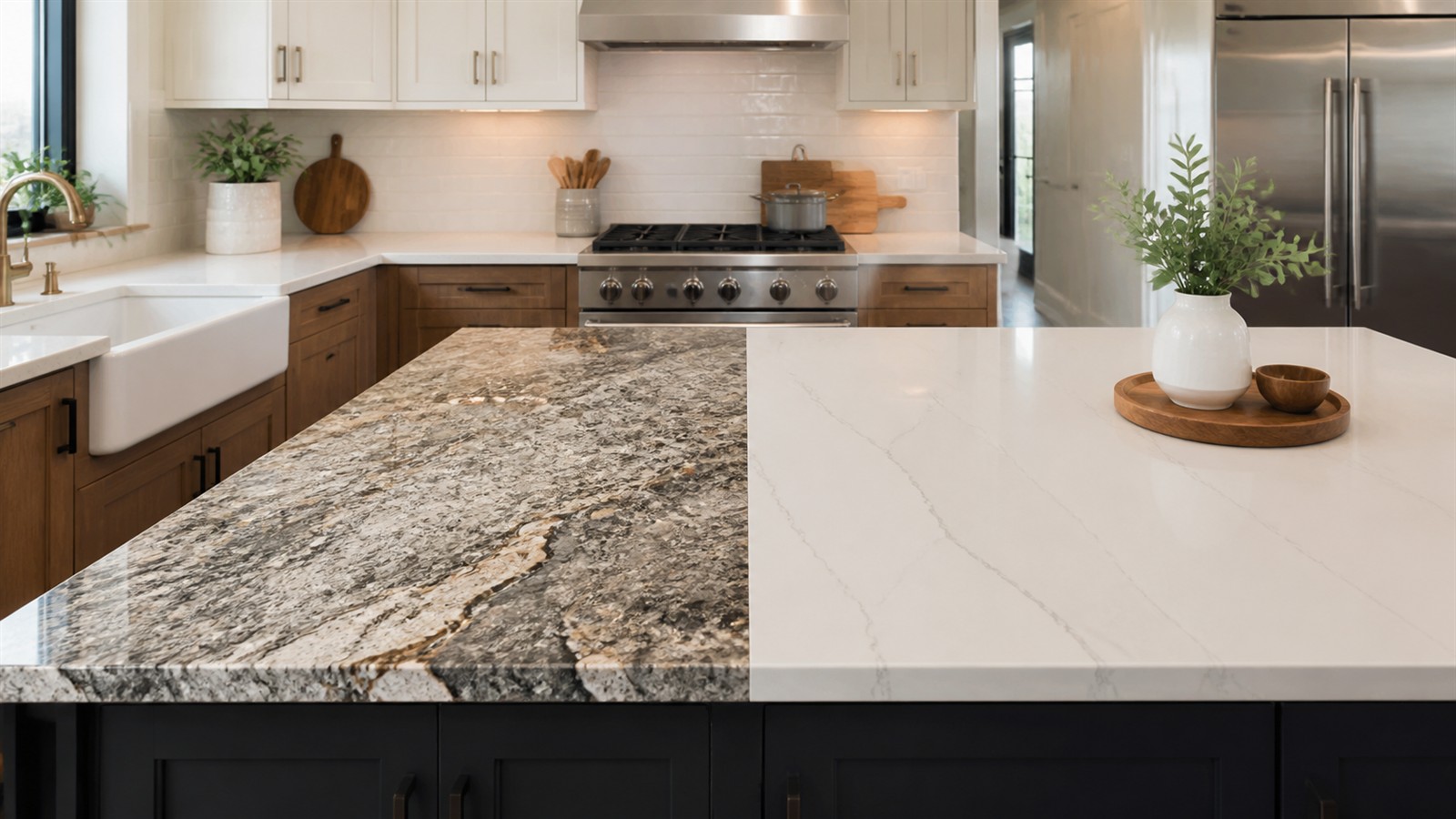
Quartz often works well in family kitchens because it is nonporous, consistent, and easy to clean. It resists many common stains and does not require sealing. For households that want a polished look without a maintenance schedule, quartz is one of the most practical options.
The main caution is heat. Very hot cookware can damage quartz, so trivets and cooling racks should be part of the routine. Families that can accept that habit often find quartz durable enough for years of heavy use.
Granite Still Earns a Place
Granite remains a strong family choice when the right slab is selected and sealed properly. Dense granite can resist wear, tolerate heat better than many engineered surfaces, and hide crumbs or minor marks through natural patterning. It also brings a sense of permanence that suits long-term family homes.
Not every granite performs identically. Lighter, more porous, or highly unusual stones may need more attention. Families should ask about the exact slab, not just the granite category. A good fabricator can explain sealing, stain risk, and finish options.
Quartzite Can Be Tough and Elegant
Quartzite is a natural stone that can offer impressive hardness and beautiful movement. It is often chosen by homeowners who want the look of marble with better durability. In a family kitchen, quartzite can be a strong option when sourced and sealed correctly.
The caution is naming confusion. Some stones are sold with labels that blur categories. Families considering quartzite should ask for details about etching, absorption, and sealing. The right quartzite can be excellent; the wrong assumption can be expensive.
Porcelain and Sintered Slabs Resist Daily Abuse
Porcelain and sintered surfaces can be excellent for busy kitchens because they resist heat, stains, UV light, and scratching. They are especially appealing for modern families who want a thin profile or dramatic stone look without some natural stone vulnerabilities.
Installation skill matters. These surfaces can be less forgiving during fabrication, and edge details require experience. A durable material still needs a durable installation. Choose a fabricator who works with the product often.
Solid Surface Offers Repairability
Solid surface may not be the hardest option, but it can be repaired and renewed more easily than many materials. Scratches can often be buffed, seams can be subtle, and integrated sinks can reduce grime-catching edges. For some family kitchens, repairability is a form of durability.
Heat protection is important, and cutting boards are necessary. Solid surface is best for families that value a smooth, renewable counter and are willing to avoid direct heat. It can be especially useful in secondary zones, homework areas, or laundry-adjacent kitchen spaces.
Avoid Fragile Beauty in the Wrong Zone
Some materials are beautiful but demanding. Marble, soft limestone, and certain specialty stones can stain, etch, or show wear quickly. They may still be wonderful in a baking area or adult household, but a busy family island is a harder test.
This does not mean families must avoid character. It means delicate materials should be placed where their aging will be accepted. A family kitchen works best when the main work zones are forgiving.
Choose Patterns That Hide Real Life
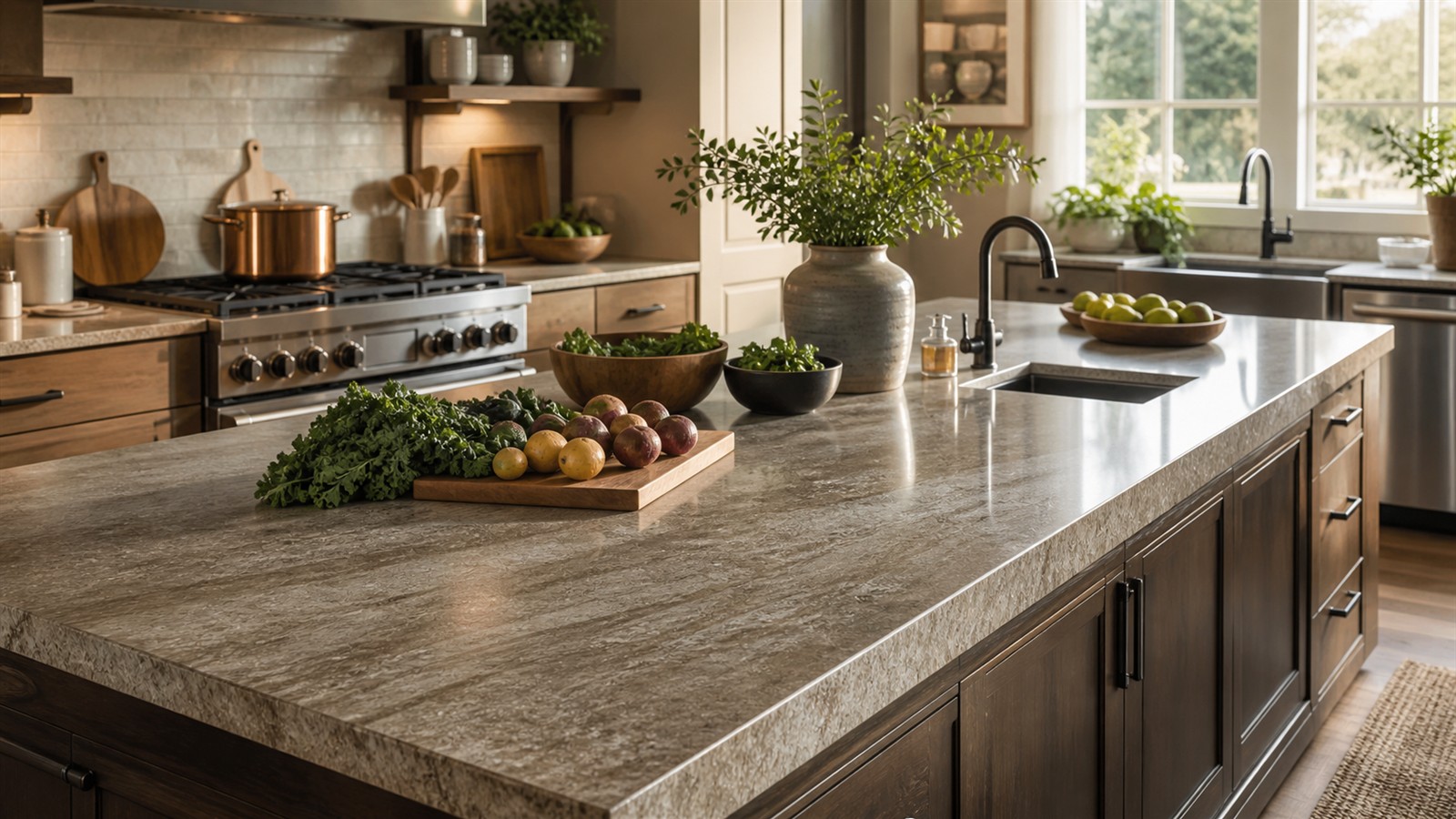
Visual durability matters. A perfectly flat white counter may be easy to clean but show every crumb, water ring, and shadow. A softly patterned surface can make the kitchen look calmer between cleanups. This is especially helpful on islands where family life collects.
The best pattern is not necessarily the busiest one. Gentle movement, mid-tone flecking, or subtle veining can disguise daily evidence without overwhelming the design. A family kitchen should look good at 6 p.m., not only after a deep clean.
Think About Edges and Corners
Countertop edges take abuse from stools, backpacks, pans, and hips moving through the kitchen. A sharp delicate edge may look sleek but chip or feel uncomfortable in heavy traffic. Eased, rounded, or subtly softened profiles often work better for families.
Corners matter too. If the island sits in a busy walkway, a softened corner can make the kitchen safer and more comfortable. Edge durability is part of material durability, even though it is often discussed later in the process.
Plan Around the Sink
The sink zone is where water, soap, dishes, and food residue meet the countertop every day. Durable family counters should perform well around moisture and cleanup. Materials that stain or swell near water are risky unless the household is careful.
An undermount sink looks clean, but the exposed counter edge needs good fabrication. A large single bowl can reduce splashing and make pan cleanup easier. The counter and sink should be chosen together rather than separately.
Protect High-Use Appliances
Air fryers, coffee makers, slow cookers, mixers, and toaster ovens can all stress countertops. Heat, vibration, moisture, and staining ingredients often gather in appliance zones. A durable countertop plan includes landing pads, trivets, pull-out shelves, or appliance garages where needed.
Families should decide which appliances stay out daily. If a machine lives on the counter, the surface below it must handle that reality. The best counter is supported by habits and accessories that reduce avoidable damage.
Evaluate Cleaning Speed
Family kitchens need counters that reset quickly. If a surface requires special cleaners after every spill, it may not feel durable in practice. Quartz, many granites, porcelain, and sintered surfaces often appeal because daily cleanup can be simple.
Cleaning speed affects how the whole kitchen feels. A counter that wipes clean after dinner helps the room return to order. A surface that needs cautious treatment may stay messy longer because people avoid dealing with it.
Balance Budget with Replacement Risk
The cheapest countertop is not always the best family value. A surface that stains, chips, or frustrates the household may be replaced sooner. A durable midrange material can be a smarter investment than a delicate premium surface chosen for looks alone.
At the same time, families do not always need the most expensive option. The goal is to pay for the performance that matters. Spend on the main island or prep zone if that is where the kitchen works hardest.
Test Before Deciding
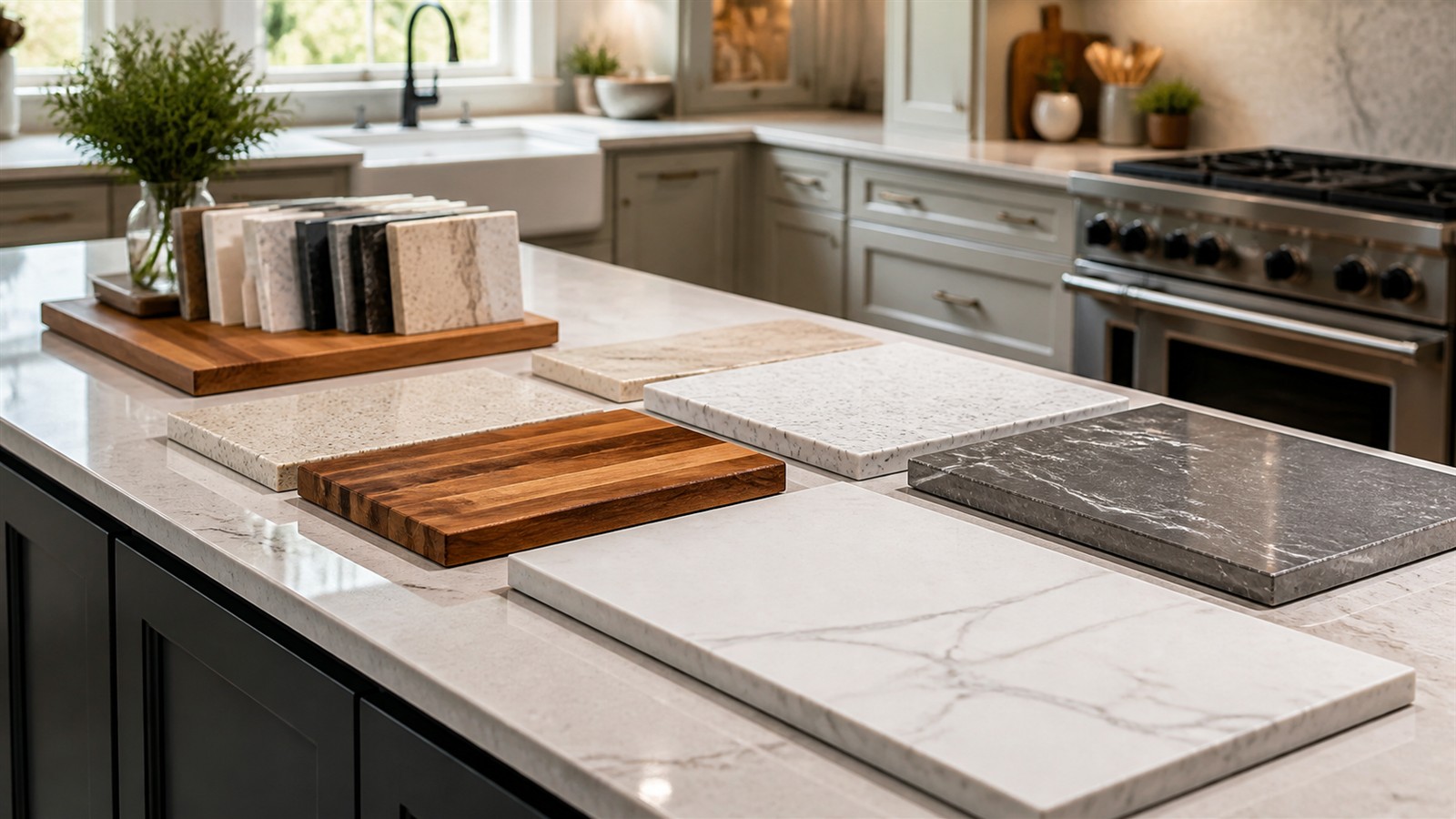
Samples should be tested with family habits in mind. Place a coffee mug, oily spoon, tomato sauce, lemon slice, and metal pan on the sample if allowed. See what wipes clean and what leaves marks. The test does not have to be scientific to be revealing.
Also look at the sample under the kitchen’s actual lighting. A durable counter should still support the room visually. The winner is the surface that performs well and looks good beside the cabinets after the test is over.
Pick the Surface That Reduces Worry
The most durable family countertop is the one that lets the kitchen be used fully. Children can help bake, groceries can land on the island, dinner can be served, and cleanup can happen without constant anxiety. That confidence is the point of choosing a durable material.
Quartz, granite, quartzite, porcelain, sintered surfaces, and solid surface can all be right in different homes. The best choice is the one whose strengths match the family’s messes, habits, budget, and style.
Read the Warranty Like a User Manual
A countertop warranty can reveal what the manufacturer worries about most. Heat, outdoor exposure, improper cleaners, unsupported overhangs, and fabrication errors may all be handled differently. Families should read the warranty before choosing a surface because daily habits may affect coverage.
Warranty language is not exciting, but it is practical. If the fine print forbids the way the kitchen is likely to be used, the material may not be the right fit. A durable choice should feel supported by the product guidance, not constantly at odds with it.
Choose Finish for Real Touch
Finish changes how durable a counter feels. A polished surface may wipe clean easily but show glare. A honed surface may look soft and modern but reveal oils or fingerprints. A textured finish can hide marks but require more careful cleaning. The best finish depends on who uses the kitchen and how often it is reset.
Families should touch samples with clean hands and then again after cooking or snack prep. This simple test can reveal smudging, streaking, and texture issues. A finish that looks good only when untouched may not be the best family choice.
Think About Support and Overhangs
Durability includes the structure below the slab. Large islands, seating overhangs, waterfall sides, and heavy stone all need proper support. A strong material can still fail if the installation ignores span limits or bracket requirements.
This matters in family kitchens because people lean, sit, bump, and gather around islands. The counter should be designed for those forces. Ask fabricators and cabinet installers to coordinate support before the slab arrives.
Use Zones for Different Durability Needs
Not every counter zone faces the same abuse. The island may take homework, snacks, and serving. The perimeter near the range may face heat. The sink area faces water. A coffee station faces stains. Mapping these zones helps choose material and accessories more intelligently.
Some families may use one durable surface everywhere for simplicity. Others may choose a tougher island and a warmer secondary counter. Either approach can work when the zones are understood before materials are ordered.
Remember That Durable Can Still Be Beautiful
Family durability does not require a dull kitchen. Many high-performance surfaces now come in refined patterns, warm colors, and elegant finishes. The key is choosing beauty that supports use rather than beauty that demands constant protection.
A counter can be both practical and special. A softly veined quartz, dense honed granite, resilient porcelain, or carefully chosen quartzite can carry the design while still handling daily family life. Durability should make the room more enjoyable, not less expressive.
Let the Counter Support the Household
The final test is whether the counter makes everyday life easier. If the surface lets people cook, gather, clean, and return the room to order without worry, it is doing more than surviving. It is helping the kitchen function as the hardworking center of the home.