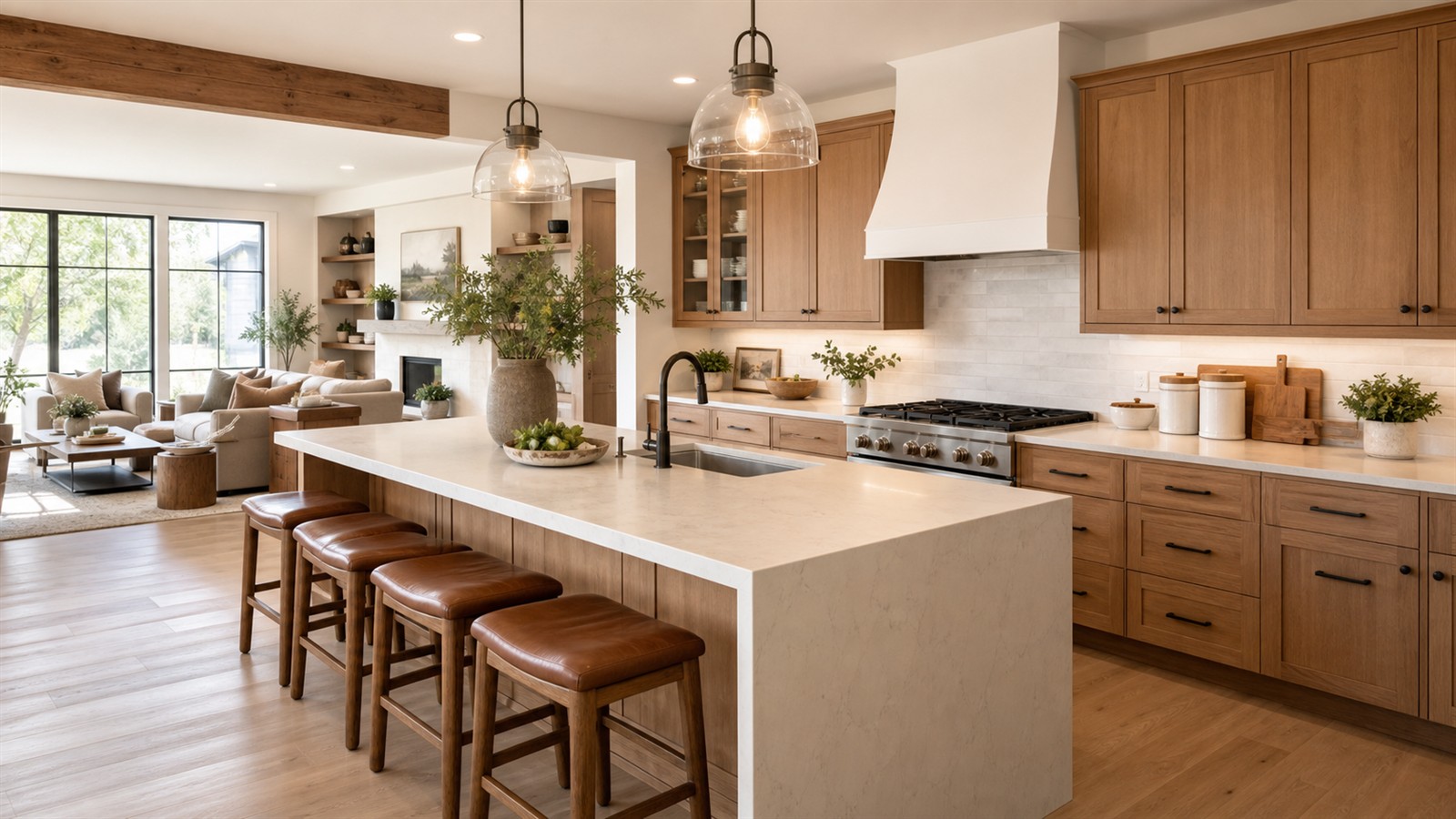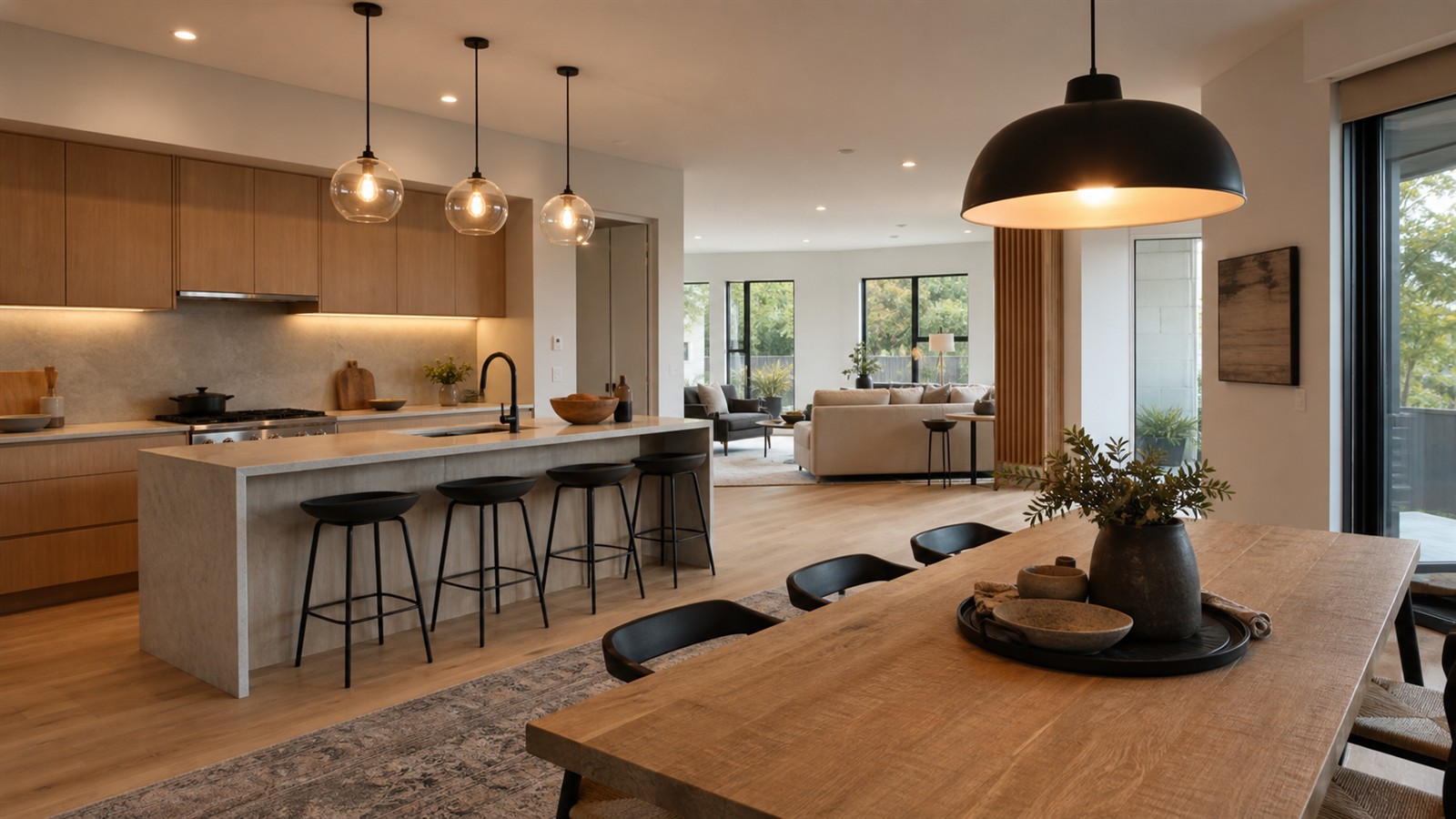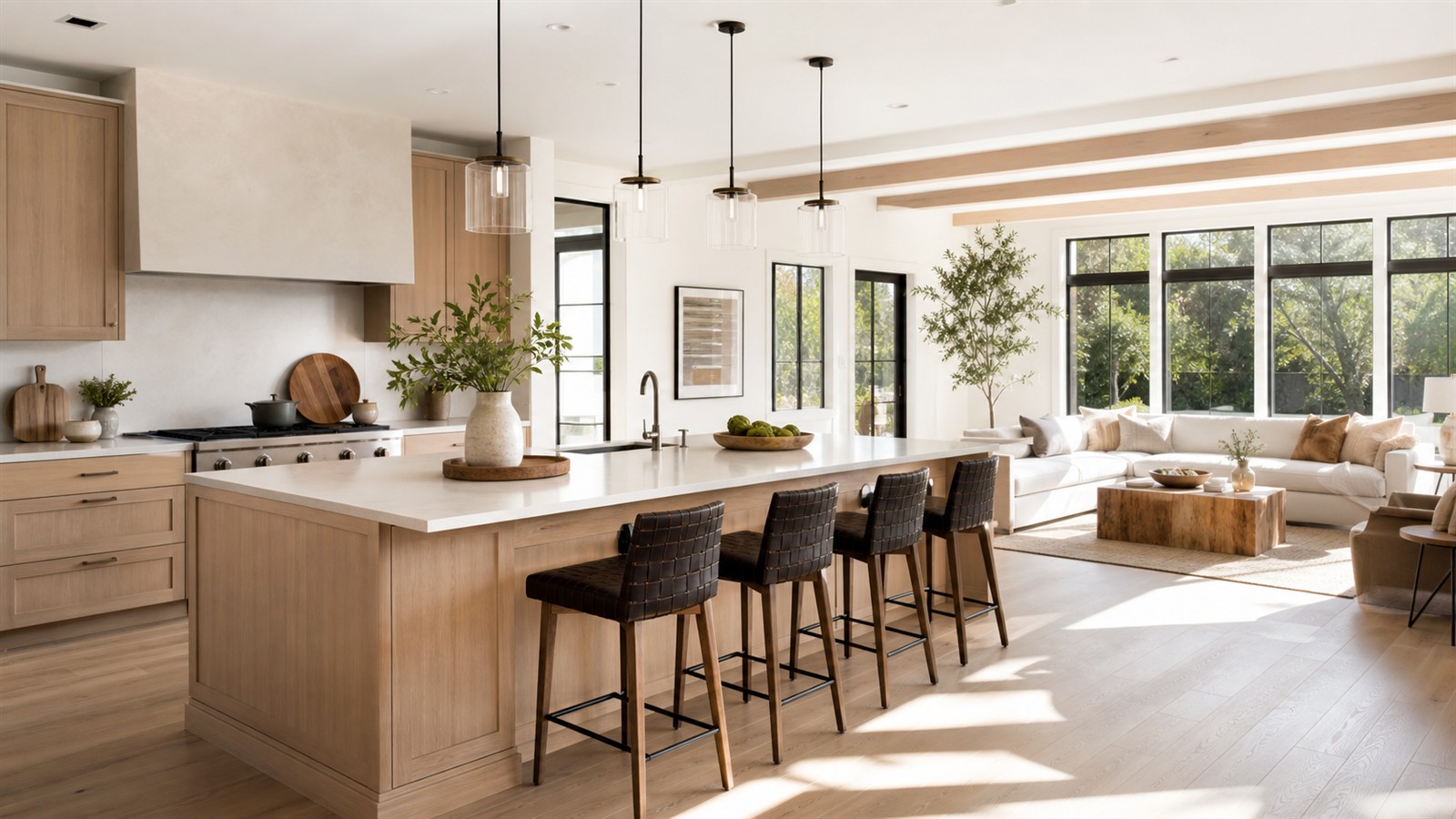
Open-Concept Kitchens That Maximize Light, Space, and Function
An open-concept kitchen succeeds when it feels generous without becoming vague. The best versions borrow daylight from nearby rooms, keep movement clear, and let cooking, dining, and conversation happen in one continuous setting without turning the kitchen into a hallway. That balance takes more than removing a wall. It depends on sightlines, island proportions, storage placement, lighting layers, and materials that keep the room visually calm. For homeowners planning a remodel or refining an existing layout, the goal is not simply a bigger-looking kitchen. The goal is a kitchen that feels connected, works hard during busy meals, and still gives the rest of the home room to breathe.
A: Many layouts feel best with about 42 inches on working sides and more where stools or heavy traffic appear.
A: Yes, especially on perimeter walls where they do not block borrowed light or main sightlines.
A: Unplanned countertop storage, too many visible small appliances, and competing finishes usually create the most visual noise.
A: Continuous flooring often enlarges the room visually, though durable rugs can define seating and dining zones.
A: Short, edited shelves can warm the room, but long runs require careful styling and frequent upkeep.
A: Near the kitchen edge when possible, so family members can reach it without crossing the main cooking zone.
A: Use a properly sized hood, vent outside when feasible, and avoid underspecified recirculating fans for serious cooking.
A: Oversizing the island until walkways, stools, and appliance doors compete for the same space.
A: Yes, if storage is disciplined and the kitchen edge does not consume the entire living area.
A: Light counters and balanced wall color usually lift daylight more naturally than high-gloss cabinets alone.
Start with the Sightline, Not the Island
Many open-concept kitchens are planned around the island first, but the stronger approach begins with what the eye sees from the main entry, dining area, and living space. A clean sightline can make the entire floor feel longer and brighter, while a poorly placed appliance tower or tall cabinet can interrupt the openness people wanted in the first place. Before choosing finishes, stand where guests and family members naturally enter the room and decide what should be visible. In most homes, the best view is a composed mix of counter surface, cabinetry, windows, and one attractive focal point rather than a direct look at the sink full of dishes.
This does not mean every practical feature needs to disappear. It means heavier elements should be anchored where they support the room instead of chopping it up. Refrigerator panels, pantry cabinets, and wall ovens often work best at the edge of the kitchen zone, where they can define the working area without blocking daylight. Lower elements can then carry the open feeling across the middle of the plan.
Use Daylight as a Planning Tool
Natural light is one of the main reasons open kitchens feel appealing, but daylight has to be guided. If the kitchen faces a window wall, keep tall storage away from that wall whenever possible so light can move across the island and into the living area. Pale counters, satin cabinet finishes, and lightly reflective backsplash materials can bounce light without creating glare. The trick is to choose surfaces that lift the room quietly rather than turning every plane into a mirror.
Window treatments also deserve attention. Heavy fabric can make an open kitchen feel dim and visually crowded, especially when the cooking zone shares space with dining or seating. Woven shades, simple roller shades, or bare windows with good trim detail usually support the architecture better. At night, the daylight strategy should be replaced by layered fixtures, not one bright ceiling grid.
Create Zones Without Rebuilding Walls
The most comfortable open-concept kitchens have invisible boundaries. The kitchen needs a working core, the dining area needs enough breathing room for chairs, and the living zone needs to feel like a place to settle rather than a waiting area beside the stove. Flooring direction, pendant placement, ceiling beams, rug edges, and cabinet runs can all mark these zones without closing them off.
An island is often the strongest divider because it offers a usable edge on both sides. The kitchen side can hold drawers, trash pull-outs, prep tools, and a dishwasher path. The outer side can support stools, serving space, or shallow storage for placemats and games. When the island is scaled correctly, it becomes a bridge rather than a barricade.
Keep the Work Triangle Flexible
Open layouts can stretch appliances too far apart because there appears to be plenty of room. A beautiful plan quickly becomes tiring if the cook has to cross the main circulation path to reach the refrigerator, then pivot around stools to reach the sink. Instead of treating the classic triangle as a rigid diagram, think in terms of short task loops. Breakfast, weeknight dinner, cleanup, and entertaining each create their own routes.
The refrigerator should be accessible to both cooks and snack-seekers without forcing everyone into the prep zone. The sink needs landing space on both sides, especially if it faces the open room. The cooktop or range should have a protected zone where handles, heat, and movement do not collide with people passing between rooms.
Choose an Island That Fits the Room’s Real Traffic
A bigger island is not automatically better. In an open kitchen, the island must leave comfortable clearance on the working side and still allow people to move around the outside without brushing chairs, walls, or sofa arms. Oversized islands can make a room feel impressive in photos while making daily life awkward. A slightly narrower island with excellent storage and good overhangs often performs better than a massive slab that eats every walkway.
Think about how the island will be used at different times of day. A family that cooks together may need uninterrupted prep surface more than four stools. A household that hosts often may benefit from a beverage refrigerator or serving end. If homework, breakfast, and chopping vegetables all happen there, durable counter material and outlet placement become part of the layout, not afterthoughts.
Let Storage Protect the Open Feeling
Open-concept kitchens expose clutter quickly, so storage has to do more than hold objects. It protects the calm of the entire shared room. Deep drawers near the range, tray dividers near the oven, a pull-out for oils, and a concealed trash station near the prep area reduce the number of items that live on the counter. Small appliances need planned homes, especially in kitchens visible from the sofa.
Open shelving should be used with restraint. A short run of shelves near a coffee station or serving area can add warmth, but long shelves packed with everyday goods can make the room feel busy. If the kitchen already opens to a living area with books, art, and textiles, closed cabinetry often gives the eye a needed rest.
Layer Lighting for Different Modes
One ceiling fixture cannot support an open kitchen through breakfast, homework, cooking, cleanup, and evening conversation. Recessed lights can provide general brightness, but pendants, under-cabinet lighting, interior cabinet lighting, and dimmable dining fixtures give the space flexibility. The kitchen should be bright when knives and heat are involved, then softer when the meal moves to the table.
Pendants over an island should relate to the island size and ceiling height rather than follow a trend by default. Too many pendants create visual clutter; too few can look underscaled. Warm color temperatures usually blend better with nearby living spaces, while dimmers help the kitchen stop feeling like a workspace once cooking is done.
Coordinate Materials Across the Shared Room
Because an open kitchen is seen alongside furniture, rugs, art, and dining pieces, its finishes should converse with the rest of the home. This does not require matching everything. In fact, too much matching can feel flat. A better approach is to repeat one or two cues: a wood tone, a metal finish, a stone undertone, or a soft color family that appears in nearby textiles.
Cabinet color has a large effect on perceived space. Light cabinets can brighten the room, but mid-tone woods and muted colors can also work beautifully when the walls, counters, and lighting are balanced. The key is avoiding abrupt finish changes that make the kitchen look like a separate showroom installed inside a living room.
Plan for Sound, Smell, and Real Life
Openness makes daily life more social, but it also carries noise and cooking smells farther. Quiet appliances, a properly sized ventilation hood, soft-close hardware, upholstered dining chairs, and washable rugs can make the shared space more comfortable. These details are not glamorous, yet they often determine whether an open kitchen feels relaxing after the remodel excitement fades.
Finally, leave room for ordinary mess. A landing zone for mail, a drawer for chargers, a cabinet for pet supplies, and a practical cleanup path make the open plan easier to maintain. The most successful open-concept kitchens are not empty stages. They are bright, connected rooms with enough structure to support real routines gracefully.
Frame the Kitchen from the Adjacent Rooms
An open kitchen is experienced from the sofa, the table, the hallway, and sometimes the front door before anyone stands at the counter. That means the public-facing side deserves design attention. Finished island panels, aligned cabinet reveals, attractive stool backs, and a tidy view toward the range or window can make the kitchen feel like part of the architecture. If the first view is a refrigerator side panel, a cluttered sink, or a tangle of small appliances, the whole open room feels less resolved.
Think of the kitchen as having several elevations rather than one front. The working elevation serves cooking. The living-room elevation should feel composed. The dining elevation should support serving and conversation. When each side has a purpose, the plan becomes more graceful without sacrificing function.
Use Negative Space as a Design Feature
Open-concept kitchens often fail because every wall and surface is asked to do too much. Negative space is not wasted space; it is what lets the room feel bright and generous. A stretch of clear counter beside the range, an unfilled wall near the dining area, or a simple panel at the island end can make the entire composition feel more expensive. In a shared room, the eye needs places to rest.
This is especially important when the kitchen includes strong materials. A veined counter, patterned tile, or dramatic pendant light needs calmer surroundings. Without that balance, the kitchen may technically be open, but visually it feels crowded.
Design for Entertaining Without Forgetting Tuesday
Entertaining often drives open-concept remodels, yet the kitchen has to work on ordinary weekdays. A beverage station near the room edge is useful during gatherings, but it can also serve morning coffee. A generous island overhang helps guests linger, but it should not steal the only prep surface. A wide path to the dining table makes parties easier and also helps during family dinners.
The strongest plans make hosting feel effortless because daily function is already strong. If cleanup, storage, lighting, and traffic work on a normal night, the kitchen can usually stretch for company. Designing only for the occasional party can leave the household with a beautiful room that feels inconvenient most of the year.
Check Proportions from a Distance
Before finalizing the design, step back from the kitchen zone and judge the proportions as part of the whole room. Cabinet height, island length, pendant scale, and the width of open walkways should look balanced from across the living area. A detail that seems modest up close can dominate when seen from twenty feet away. This distance check helps prevent the open kitchen from overpowering the room it is meant to share.
It also reveals whether the kitchen still feels bright after practical storage has been added. If the final plan preserves long views, clear counters, comfortable paths, and useful work zones, the open concept is doing its job every single day.