Modern Open-Concept Kitchen Ideas for Seamless Family Living
A family open-concept kitchen has to perform under pressure. It may host breakfast, lunch packing, homework, dinner prep, cleanup, weekend baking, and a casual gathering within the same few hours. Modern design helps when it turns that activity into a calmer system rather than a larger mess on display. The best family layouts connect people without putting everyone in the cook’s way. They use durable finishes without feeling cold, create storage that children and adults can both understand, and shape the island into a practical center of gravity. Seamless family living comes from a kitchen that welcomes togetherness while still giving every routine a sensible path.
A: Durable quartz, porcelain, or well-sealed stone usually handles heavy cleaning and daily spills more easily than delicate surfaces.
A: Enough for casual use, but not so many that stools crowd the dining table or main walkway.
A: Yes, low drawers for cups, bowls, or snacks can build independence while keeping them away from heat.
A: Use quiet appliances, soft furnishings nearby, washable rugs, and cabinet hardware that closes gently.
A: It can be, if the finish is washable and paired with hardware that reduces constant touching on door fronts.
A: At an island end, nearby table, or small command area where supplies and outlets are available without blocking prep.
A: A single zone for containers, wraps, napkins, bottles, and pantry snacks saves the most morning time.
A: Only in small, edited areas; closed storage is usually better for the volume of daily family gear.
A: Keep seating and kid zones close to the island but outside the range, oven, and knife-prep path.
A: Clean lines, durable surfaces, wood accents, warm lighting, and storage that keeps clutter from taking over.
Design for the Morning Rush First
Family kitchens reveal their weaknesses most clearly in the morning. Someone needs coffee, someone needs cereal, someone needs a lunchbox, and someone is looking for a missing water bottle. A modern open-concept plan should make those routines possible without crowding the cooking zone. Breakfast supplies, mugs, bowls, and everyday utensils belong near the refrigerator or pantry, not scattered across the entire kitchen.
A dedicated morning station can be simple. It might be a cabinet with toaster storage, a drawer for lunch containers, a coffee area, and a counter near the refrigerator. When this station sits at the edge of the kitchen, children and adults can use it while another person cooks. The room feels connected, but the work paths do not collapse into one another.
Make the Island Earn Its Footprint
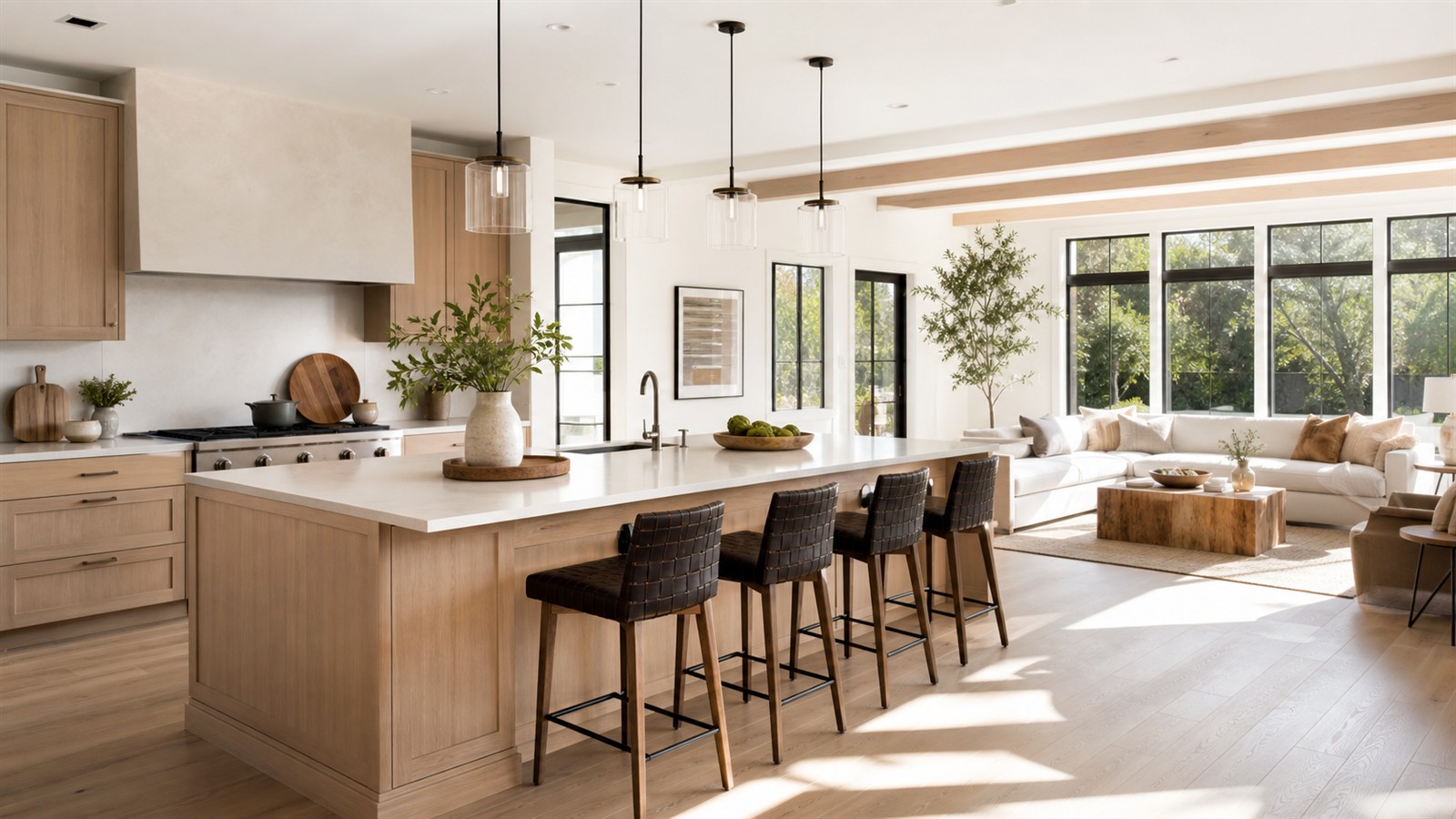
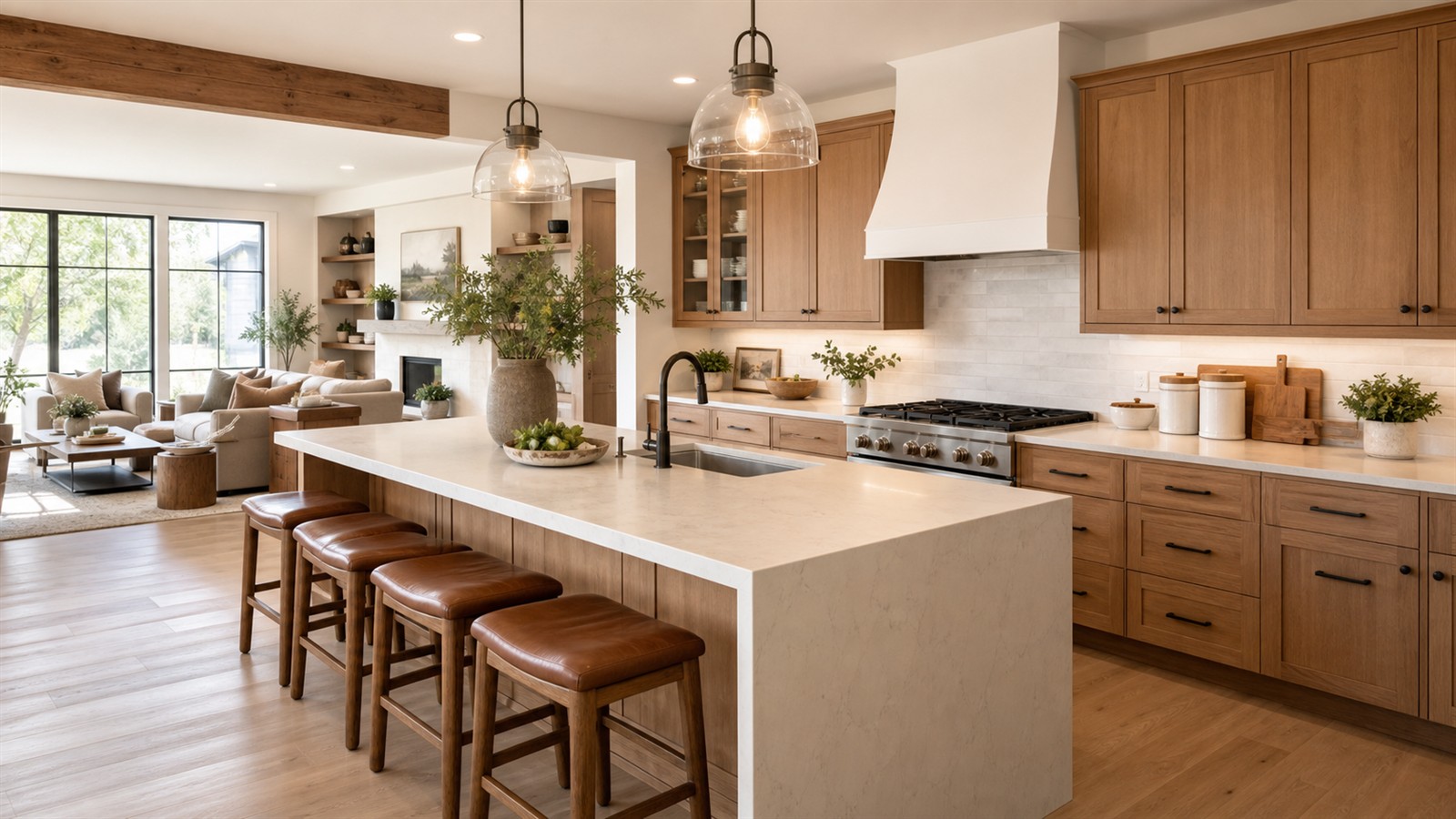
In a family open-concept kitchen, the island is often the hardest-working surface in the home. It needs to support prep, snacks, homework, serving, and conversation, sometimes all in one day. A practical island includes deep drawers, a protected outlet plan, comfortable seating, and a surface material that can handle spills and repeated cleaning. It should not be so precious that everyone is afraid to use it.
The seating side deserves just as much planning as the working side. Children need knee room and stable stools. Adults need enough clearance to sit without blocking circulation. If the dining table is nearby, island seating may be better as two or three casual spots rather than a full row that competes with meals.
Choose Durable Finishes with Warmth
Modern family kitchens often lean on quartz, porcelain, engineered flooring, washable paint, and easy-clean cabinet finishes. These materials are useful because they reduce maintenance stress. Still, durability should not make the room feel sterile. Wood accents, textured stools, warm lighting, and softer wall colors can keep the kitchen welcoming while the main surfaces stay practical.
Cabinet finish is especially important. Very glossy doors show fingerprints quickly, while extremely matte finishes can mark depending on the product. A satin painted cabinet or a wood-look slab door often strikes a good balance. Countertops with gentle movement hide crumbs and water spots better than perfectly flat, solid colors.
Keep Kids Near, Not Underfoot
One of the joys of an open kitchen is being able to supervise, talk, and share space while cooking. One of the risks is having every child, pet, and guest step directly into the hot zone. A good family layout creates nearby landing places: island seating outside the prep lane, a low drawer for kid dishes, a homework end with outlets, or a snack zone near the refrigerator.
These choices give children independence without making the range or oven the center of traffic. The kitchen remains social, but the cook has a protected lane. As children grow, the same zones can shift from snack access to schoolwork, baking, or casual meals with friends.
Use Storage Labels the Room Can Understand
Family storage works best when the layout explains itself. Deep drawers for pots near the range, plates near the dishwasher, lunch supplies near the pantry, and cleaning tools near the sink reduce the number of questions asked every day. You do not need visible labels on every bin if the cabinet logic is clear.
Open-concept kitchens benefit from closed storage for the things that rarely look good in public: bulk snacks, mismatched cups, cleaning supplies, and countertop appliances. A few open shelves can display attractive daily items, but the heavy lifting should happen behind doors and drawers. The shared room will feel calmer when storage absorbs visual noise.
Plan Cleanup as a Family System
Cleanup is not just a sink and dishwasher. In a busy family kitchen, it is a system of scraping, rinsing, loading, wiping, putting away, and resetting the island for the next use. The trash and recycling should sit near the prep and cleanup zone. Dish storage should be close enough to the dishwasher that unloading does not require a lap around the room.
If the island is used for meals and homework, give cleaning supplies a discreet but reachable home. A drawer for towels, a pull-out for sprays, and a landing spot for dirty lunch containers can make the difference between a room that resets quickly and one that stays cluttered all evening.
Balance Screen Time and Conversation
Modern family living often includes devices, but the kitchen layout can decide whether screens dominate the room. Charging drawers, hidden outlets, and a small command area help phones and tablets land somewhere other than the main prep surface. If a television is visible from the kitchen, consider whether it supports family routines or constantly pulls attention away from meals.
The island can encourage conversation when seating wraps an end or faces across a corner. A straight row of stools looks clean, but it can make people sit like spectators. If space allows, even a small return or nearby table can make family interaction feel more natural.
Make Lighting Adapt to Family Rhythms
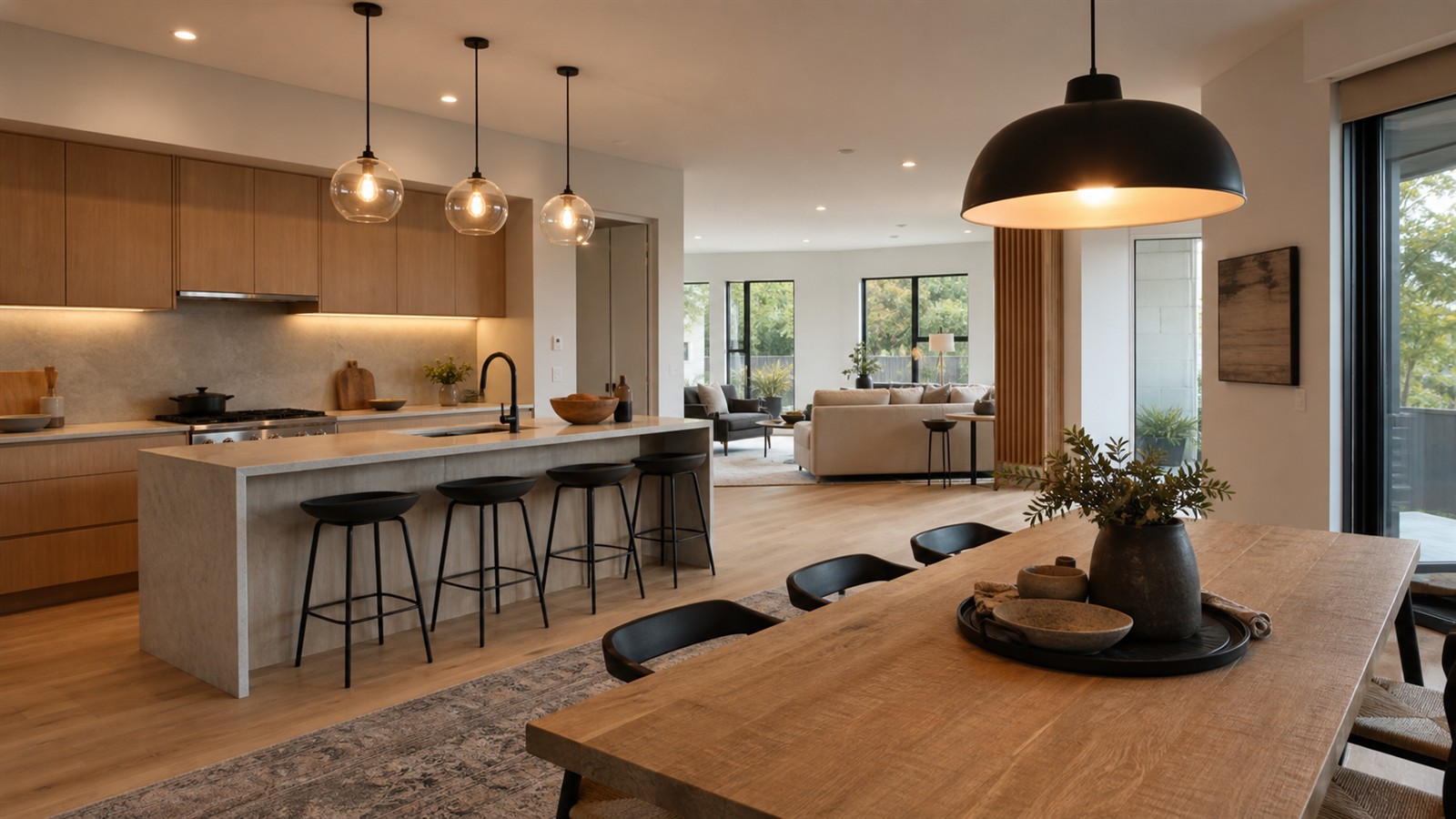
Family kitchens need lighting that changes throughout the day. Bright task light helps with chopping, lunch packing, and cleanup. Softer island pendants make snacks and conversation feel relaxed. A dining fixture can mark family meals as a different mode from homework or prep, even when everything happens in one open room.
Durable fixtures are worth considering. Glass shades may show dust and fingerprints, while woven or metal fixtures can be more forgiving. Dimmers are essential because an open kitchen that is bright enough for cleanup may feel harsh when the family is winding down.
Leave Room for the Unscripted
No family kitchen can predict every routine. Sports bags, birthday cupcakes, science projects, visiting relatives, and holiday meals all ask the room to flex. A seamless open-concept design leaves some unassigned counter space, a few adaptable drawers, and circulation that can handle extra bodies. Over-optimizing every inch can make the kitchen brittle.
The most successful modern family kitchens feel organized without being rigid. They make everyday tasks easier, keep people connected, and recover quickly from mess. When storage, traffic, lighting, and materials are planned around real family behavior, the open concept becomes more than a style choice. It becomes the room that helps the household move through the day.
Design for Different Ages at Once
A family kitchen has to age with the household. Toddlers need safe distances from heat and sharp tools. School-age children need reachable dishes, snack access, and places to spread out. Teenagers may use the kitchen as a social hub, reheating food, making drinks, and gathering with friends. A layout that only solves one life stage can feel dated quickly, even if the finishes still look current.
Flexible zones are the answer. Low drawers can start with plastic cups and later hold lunch containers or baking tools. An island end can begin as a coloring spot and become a laptop perch. A pantry cabinet can shift from snacks to sports nutrition, bulk goods, or entertaining supplies. The structure stays useful while the contents change.
Protect the Cook’s Focus
Open family kitchens are social, but cooking still requires concentration. Hot pans, knives, boiling water, and open oven doors need a zone where the cook is not constantly dodging traffic. The plan should make it obvious where people can gather and where they should not linger. This can be accomplished through island orientation, appliance placement, and storage that keeps non-cooks at the edge of the kitchen.
For example, placing the microwave or snack drawer away from the range reduces interruptions. Keeping the refrigerator accessible from the outside edge prevents repeated crossings through prep. These small choices make the kitchen feel calmer and safer during the busiest parts of the day.
Make Maintenance Part of the Style
Family kitchens look best when the materials support realistic upkeep. A backsplash that wipes clean, a floor that tolerates dropped ice, cabinet fronts that can handle repeated touching, and counters that do not punish every spill all contribute to the room’s appearance. Maintenance is not separate from style; it is what allows the style to survive daily life.
This is why samples should be tested under real conditions. Touch cabinet doors with damp hands, place crumbs on counter samples, and view flooring in evening light. A finish that looks perfect in a showroom may become frustrating in a household that cooks, gathers, and cleans several times a day.
Create a Family Command Point
Open kitchens often become the unofficial command center, so it helps to plan that role instead of fighting it. A slim drawer for papers, a concealed charging spot, a calendar wall near the pantry, or a cabinet for school forms can keep administrative clutter from spreading across the island. The command point should be close enough to daily traffic to be useful but not directly in the cooking lane.
This small zone can also support hospitality. Keys, guest napkins, extra chargers, and takeout menus all need somewhere to go. When the kitchen acknowledges these non-cooking jobs, the room stays more orderly and the main work surfaces remain available for food.
Keep the Dining Table Relevant
Family open-concept kitchens sometimes make the island so central that the dining table becomes an afterthought. That can weaken family meals and make the room feel like a snack bar. Give the table comfortable lighting, reachable serving storage, and enough space that people want to sit there. A kitchen designed for seamless living should support quick breakfasts and slower dinners, not just one mode of eating.
When the island and table have different roles, the room feels more generous. The island can handle prep, projects, and casual bites, while the table remains the place where the family settles in. That distinction also helps cleanup, because dishes, homework, and serving pieces are less likely to compete for one crowded surface.
The best modern family kitchens feel easy to re-enter several times a day. They support the rush, the pause, the meal, and the reset without demanding a full cleanup between every activity. That ease is what makes the open layout feel generous rather than exposed. A room that handles small transitions well will usually handle the big family moments better too. The layout should feel ready for ordinary weekdays and full-house weekends alike, without needing constant adjustment at all.