Smart Open-Plan Kitchen Layouts That Blur the Lines Between Living and Dining
A smart open-plan kitchen does more than remove barriers between rooms. It choreographs the way people cook, sit, serve, talk, and move through the home. When the kitchen, dining area, and living room share one footprint, every design decision has a wider effect. A cabinet wall can become architecture. An island can become a buffet, homework counter, and social edge. Lighting can signal when the room is working and when it is relaxing. The strongest layouts blur the lines between living and dining without making the entire space feel like one undefined hall. They create connection, then quietly give each activity enough structure to feel natural.
A: Letting the island consume the dining zone before circulation and chair space are measured.
A: It can, but households that dislike visible dishes may prefer a perimeter sink and cleaner island.
A: Use lighting, furniture placement, and cabinet edges to define zones without rebuilding walls.
A: No. They need related tones and proportions, not identical finishes across every piece.
A: Near the table edge, ideally in a hutch, island cabinet, or shallow built-in that does not invade prep space.
A: They can save space, especially along a wall, but they need comfortable access and easy cleaning.
A: Plan quick cleanup storage, protected sink sightlines, and a serving surface away from dirty dishes.
A: Yes, washable rugs can soften dining or living areas while leaving the cooking lane durable and clear.
A: Quiet dishwashers, strong ventilation, and well-placed refrigeration usually make the largest daily difference.
A: Calm proportions, aligned cabinetry, layered lighting, and finishes that look intentional from every zone.
Think in Overlapping Zones
Open-plan rooms rarely work as three separate boxes after the walls come down. They work as overlapping zones, each with a primary purpose and a few shared edges. The kitchen might own the appliance wall and prep surface, while the island overlaps with dining as a serving counter. The dining table may support meals, laptops, projects, and casual conversation. The living area may borrow kitchen lighting during gatherings but still needs its own softer mood.
Planning with overlap prevents the layout from becoming rigid. Instead of asking where the kitchen ends, ask what happens at each edge. A counter facing the dining table should support serving and conversation. A cabinet run near the living area might hold glassware, board games, or linens rather than only cookware. When edges are assigned thoughtfully, the room feels fluid without becoming messy.
Use the Island as a Social Hinge
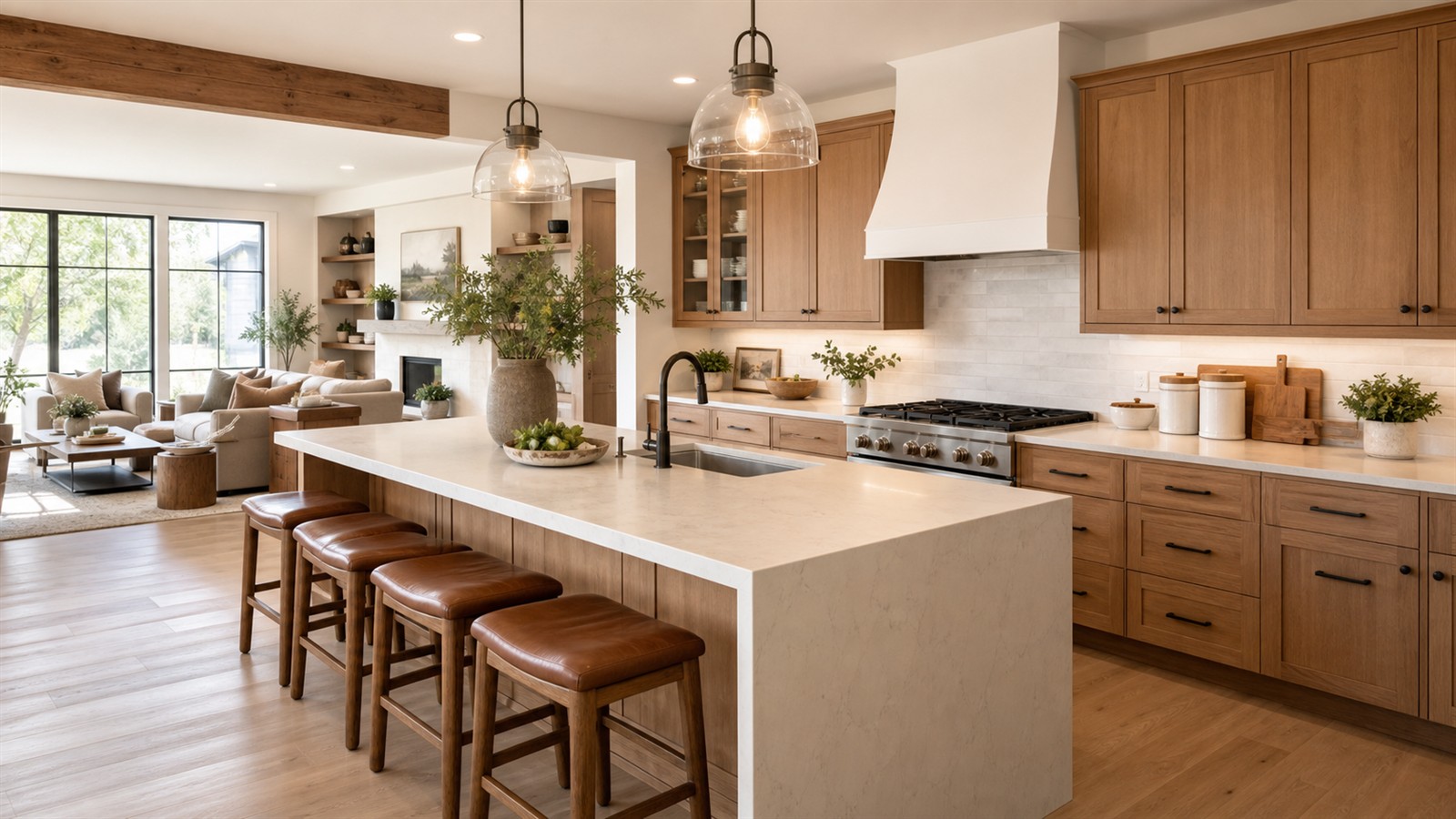
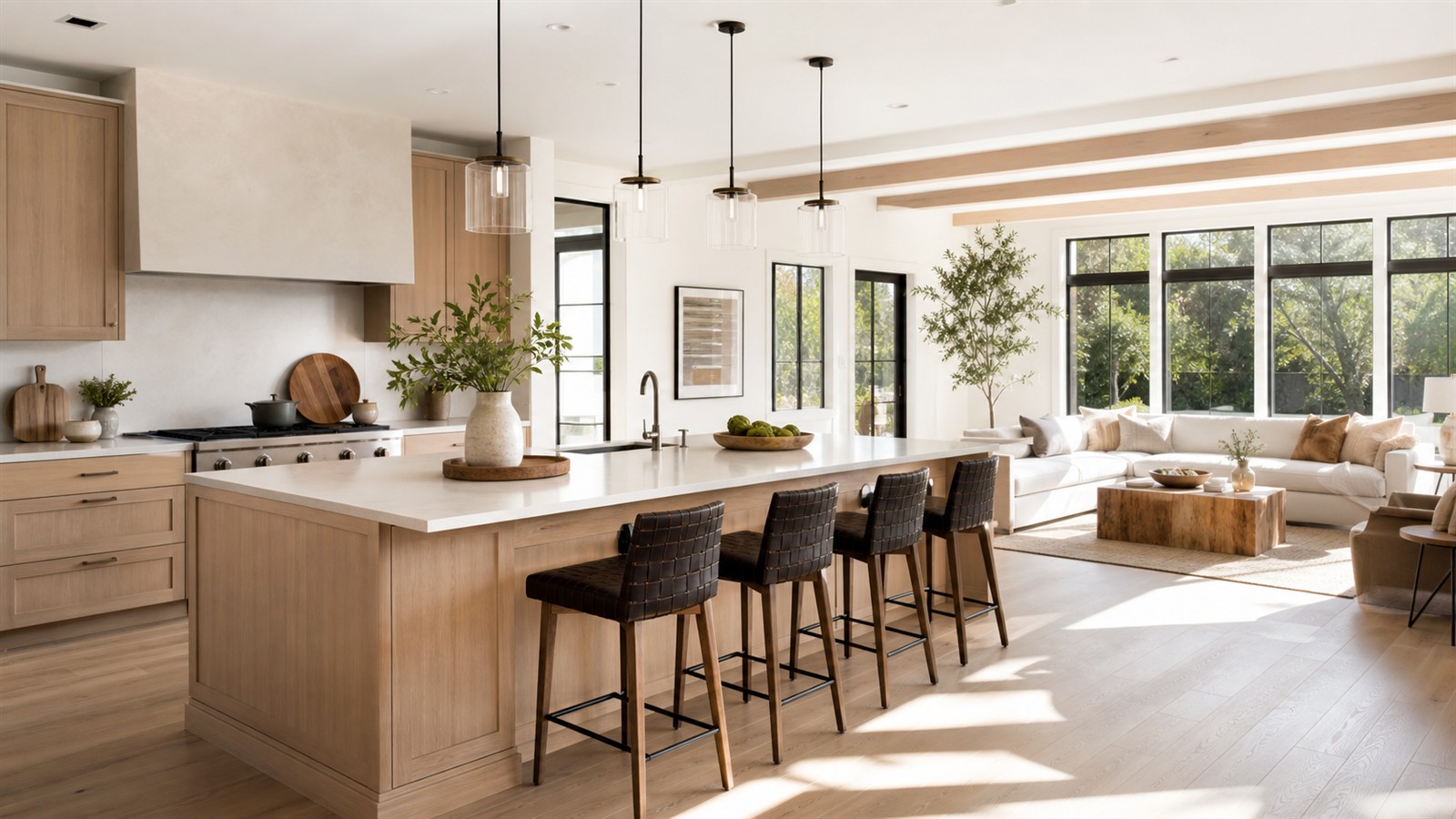
In many open-plan kitchens, the island is the hinge between cooking and gathering. It should be useful from both sides, attractive from the public view, and scaled to preserve circulation around dining chairs and seating. The working side needs storage, trash access, outlets, and landing space. The social side needs comfortable overhang, durable surfaces, and enough clearance that stools do not fight with a nearby table.
An island can also steer movement. If placed parallel to the main cabinet run, it creates an obvious kitchen lane. If angled or extended poorly, it can send people through the cook’s path. Before committing, map how someone walks from the entry to the sofa, from the refrigerator to the table, and from the sink to the dishwasher. Those routes reveal whether the island is helping or interrupting the room.
Let the Dining Area Breathe
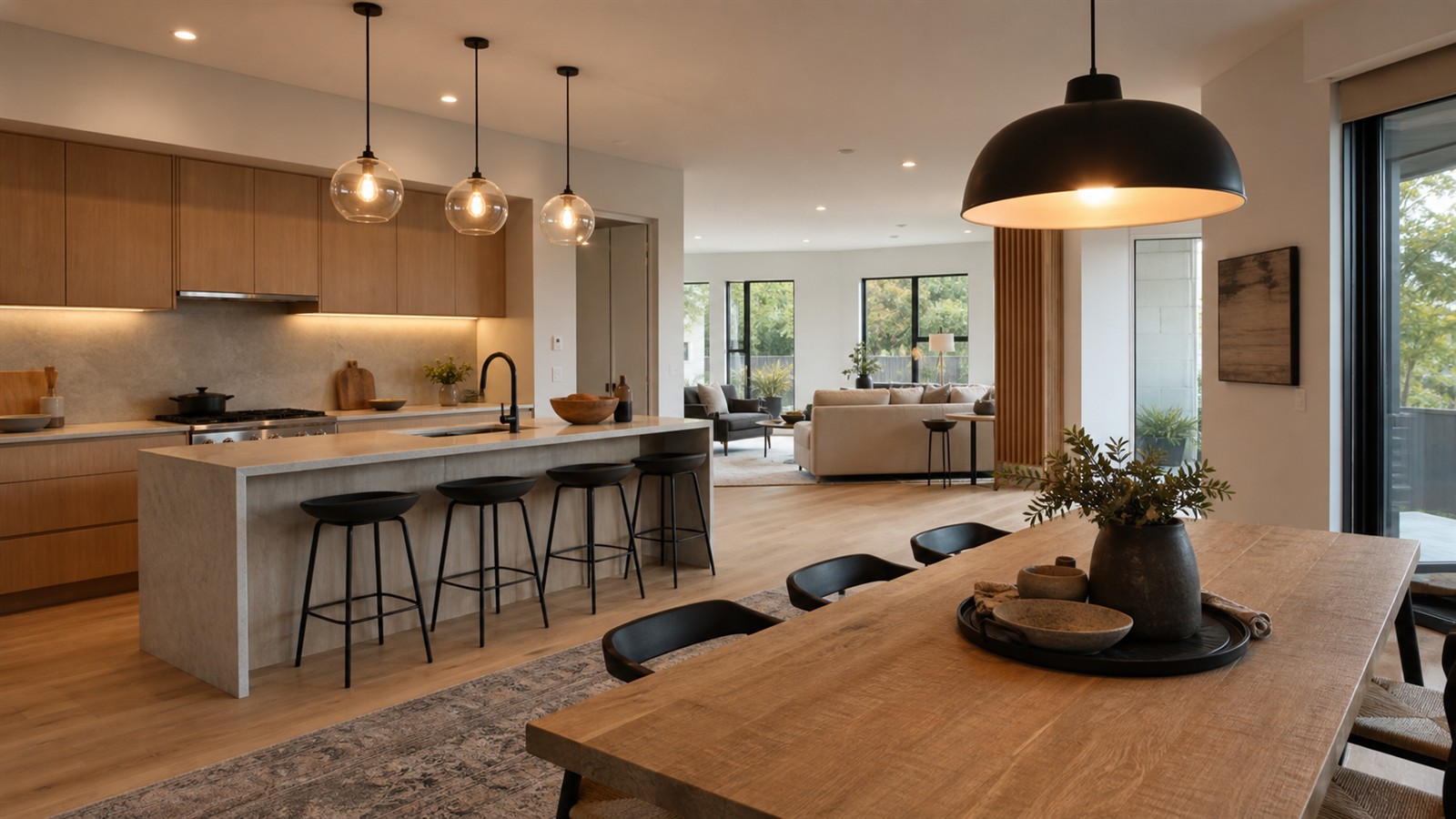
The dining zone is often squeezed after an island grows too large. That mistake weakens the entire open plan because the table becomes awkward to use and chairs scrape into walkways. A smart layout gives the table its own envelope, including pullback space, serving access, and a fixture that marks it as a destination. Even in casual homes, dining feels better when it is not treated as leftover square footage.
Round tables can soften tight transitions, while rectangular tables often align well with long islands and cabinet walls. Built-in banquettes can save space, but they should not trap people or make daily cleaning frustrating. The table should feel close enough to the kitchen for easy serving and far enough away that diners are not sitting inside the cleanup zone.
Design Cabinetry Like Furniture
Because open-plan cabinetry is visible from living and dining areas, it needs the composure of furniture. Long, uninterrupted cabinet runs can look elegant when proportions are calm, hardware is consistent, and appliance breaks are handled deliberately. A hutch-style cabinet near the dining area can soften the transition and provide storage for dishes, linens, or serving pieces. This kind of element makes the kitchen feel integrated rather than merely exposed.
Texture matters. Wood grain, painted finishes, glass doors, and metal accents should relate to nearby furniture without copying it exactly. If the living room has warm wood tones, a kitchen island or pantry wall can echo that warmth. If the dining area is more tailored, slab doors and quiet hardware may be the better bridge.
Separate Mess from the Main View
Open-plan living makes kitchen mess more visible, so the layout should protect the most common sightlines. A sink placed directly in the island can be practical, but it also puts dishes in the center of the room. Some households accept that tradeoff because they value conversation while washing up. Others prefer the sink on a perimeter wall with the island reserved for prep, serving, and seating.
Cleanup support matters either way. A dishwasher beside the sink, a pull-out trash close to prep, and drawers for daily dishes reduce the time mess spends in public view. If space allows, a small scullery, appliance pantry, or recessed cleanup niche can keep the main room calmer during entertaining.
Use Lighting to Change the Room’s Role
Lighting is one of the best tools for blurring and defining zones at the same time. Bright task lighting belongs over prep surfaces and cooking areas. A lower, warmer fixture over the dining table gives meals a center of gravity. Lamps or sconces near the living area help the room relax when the kitchen is no longer the main activity.
All of these layers should be controlled separately. During meal prep, the kitchen can be bright while the dining area waits quietly. During dinner, pendants and recessed lights can dim while the table glows. Afterward, the living area can take over with softer light, leaving the kitchen present but not dominant.
Manage Traffic Before Choosing Finishes
Traffic problems are easier to solve on paper than after cabinetry is installed. Open-plan layouts often contain multiple routes: from entry to kitchen, kitchen to dining, dining to living, and living to outdoor space. If those paths cross the cooking zone, the kitchen can feel hectic even when it looks beautiful. Clear circulation should wrap around the work area rather than slice through it.
Pay special attention to door swings, stool depth, appliance handles, and chair movement. A few inches can decide whether a walkway feels generous or tense. When the plan includes sliding doors to a patio, make sure outdoor traffic does not turn the island into an obstacle course during gatherings.
Choose Finishes That Travel Well
In a closed kitchen, a bold backsplash or strong cabinet color can stand alone. In an open plan, every finish travels visually into the next zone. Stone undertones may affect the dining wall color. Cabinet hardware may sit within view of curtain rods and lamp bases. Flooring may need to survive cooking spills and still feel appropriate under a sofa.
This does not mean the palette must be timid. It means contrast should be placed with intent. A deep island color can ground the kitchen if the perimeter stays calm. A patterned backsplash can work if the dining and living textiles are quieter. The best open-plan finishes look good from across the room, not only from two feet away.
Build in Everyday Flexibility
Open-plan kitchens are asked to host more kinds of life than traditional kitchens. A child may be doing homework at the island while someone cooks. Guests may gather at the counter while the table is being set. A laptop may land near the coffee maker in the morning. The layout should allow these moments without making every surface feel claimed.
Flexible storage helps. A drawer for chargers, a cabinet for placemats, a tray for mail, and a shelf for serving pieces can prevent daily objects from drifting across the room. When living and dining lines blur, the smartest kitchens give small routines a specific place to land.
Give the Room a Quiet Backstage
Even the most elegant open-plan kitchen needs somewhere for less attractive work to happen. That backstage area might be a tall pantry, a recessed appliance cabinet, a short cleanup wall, or simply a stretch of counter that is not visible from the main seating area. Without it, every toaster crumb, coffee filter, and mixing bowl competes with the living space. The room may look open, but it will rarely feel restful.
A backstage zone does not have to be large. A pocket-door pantry can hide small appliances. A cabinet beside the refrigerator can hold lunch supplies. A perimeter sink can keep cleanup away from the island. The point is to let the public side of the kitchen stay welcoming while the practical side still has room to work.
Scale the Architecture to the Furniture
Open-plan kitchens feel more believable when cabinet massing relates to the furniture around it. If the living area is low and relaxed, a towering wall of dark cabinetry may feel heavy unless balanced with windows or lighter finishes. If the dining area has substantial built-ins, the kitchen can carry more visual weight. Scale is not only about measurements; it is about how objects feel together in the same volume.
Ceiling details can help. A beam, tray, or subtle change in ceiling plane can define the kitchen without building a wall. The detail should be restrained enough to support the room rather than announce a boundary. Done well, it gives the open plan rhythm.
Plan the View After Dinner
Many layouts are judged while everything is clean, but open-plan kitchens are often viewed after dinner, when pans are cooling and dishes are waiting. Decide what the room will look like at that moment. If the sink is on the island, choose a deep basin and give dishes a quick landing area. If the range wall is the focal point, make sure tools and oils can be tucked away quickly.
This practical view test improves design decisions. It may change where the trash pull-out goes, how much closed storage is needed, or whether a decorative shelf belongs beside the cooking zone. A smart open-plan kitchen looks good in use, not only in photographs.
Let Acoustics Influence the Layout
Sound travels quickly when living, dining, and cooking share one space. Cabinetry, upholstery, rugs, curtains, and even the placement of the dishwasher can affect how calm the room feels. A layout that puts the noisiest appliances beside the main seating area may become irritating long before the finishes wear out. Consider where conversations happen, where children play, and where someone might work on a laptop while dinner is being prepared.
Soft materials in the dining and living zones can balance the hard surfaces required in the kitchen. The result is still open, but it feels less echoing and more comfortable during everyday use.
That comfort is what separates a showy open plan from a livable one. When sound, traffic, storage, and sightlines are handled together, the kitchen can blur into the dining and living areas without swallowing them. The room remains social, but each activity still has enough shape to feel easy.
That is the real measure of a smart layout: people can drift between cooking, dining, and relaxing without feeling as if they have entered the wrong zone. The boundaries are soft, but the room still knows what each moment needs throughout the day and evening routines.