Smart Cabinet Storage Ideas That Turn Chaos into Calm
Kitchen chaos usually starts when everyday items do not have logical homes. Pots are too far from the range, lunch containers spill from a high shelf, spices hide behind bottles, and cleaning supplies multiply under the sink. Smart cabinet storage fixes more than clutter. It creates a calmer rhythm for cooking, cleaning, unloading groceries, and resetting the room. The best storage ideas are not about stuffing more into every cabinet. They are about placing the right things near the right tasks so the kitchen explains itself every time someone opens a door or drawer.
A: Deep drawers and pull-outs usually create the biggest daily improvement.
A: Only when they solve visibility, freshness, or messy packaging problems.
A: Near prep or cooking, in a drawer or pull-out where labels are easy to see.
A: Separate lids, nest bases by shape, and discard mismatched pieces.
A: Only cleanup items that tolerate moisture and need quick access.
A: They are worth it when the corner stores items used often enough to justify access.
A: Drawers can work beautifully when they have pegs or dividers.
A: Enough that items can return home without rearranging a shelf.
A: Create realistic cabinet homes for appliances, oils, tools, and drying items.
A: Logical placement, visible access, edited categories, and fast reset paths.
Map Tasks Before Buying Inserts
Storage should begin with tasks, not products. Prep, cooking, baking, cleanup, coffee, lunch packing, and serving each need different tools. When those routines are mapped first, cabinet inserts become solutions rather than impulse purchases. In a kitchen that is used every day, this choice affects more than appearance. It changes how the room ages, how quickly it resets after meals, and how confident the homeowner feels about the investment.
For cabinet organization, the practical test is simple: the design should still make sense after years of cooking, cleaning, guests, spills, and changing family needs. A well-chosen kitchen keeps supporting daily life while still looking intentional.
Use Drawers for Heavy Daily Items
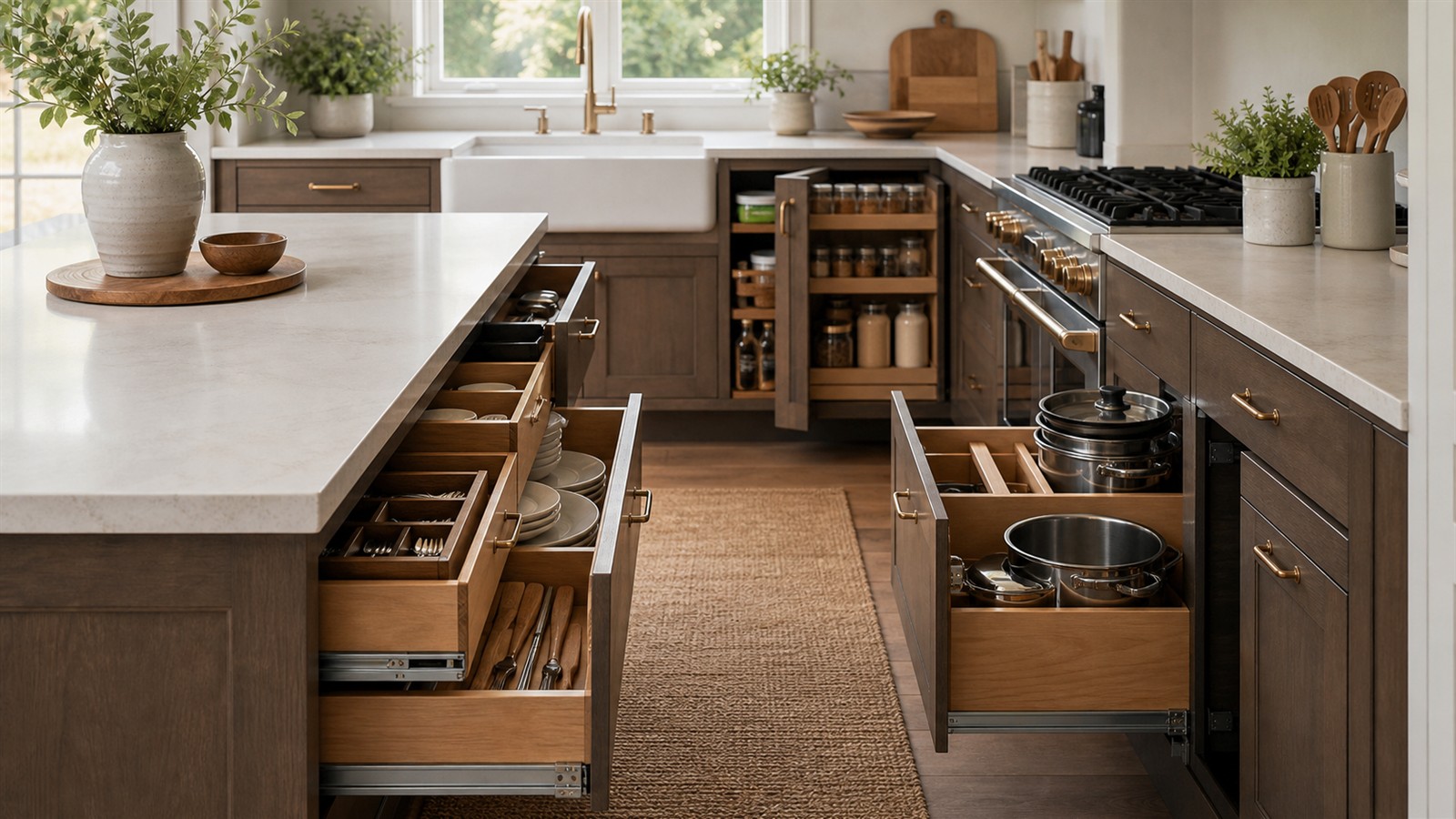
Deep drawers often calm a kitchen faster than shelves because stored items come forward. Pots, pans, bowls, containers, and small appliances are easier to see and lift. Drawers also prevent the cabinet archaeology that makes people rebuy items they already own. In a kitchen that is used every day, this choice affects more than appearance. It changes how the room ages, how quickly it resets after meals, and how confident the homeowner feels about the investment.
For cabinet organization, the practical test is simple: the design should still make sense after years of cooking, cleaning, guests, spills, and changing family needs. A well-chosen kitchen keeps supporting daily life while still looking intentional.
Create a Real Prep Zone
Prep storage works best when cutting boards, knives, mixing bowls, trash, and spices sit near a clear counter. If these pieces are scattered, cooking feels chaotic before it begins. A good prep zone shortens movement and keeps mess contained. In a kitchen that is used every day, this choice affects more than appearance. It changes how the room ages, how quickly it resets after meals, and how confident the homeowner feels about the investment.
For cabinet organization, the practical test is simple: the design should still make sense after years of cooking, cleaning, guests, spills, and changing family needs. A well-chosen kitchen keeps supporting daily life while still looking intentional.
Give Lids a Separate Strategy
Lids create clutter because they are awkward, flat, and easy to lose. Vertical dividers, shallow drawers, and dedicated racks can turn a frustrating pile into a quick grab. The best lid storage matches the container shapes actually owned. In a kitchen that is used every day, this choice affects more than appearance. It changes how the room ages, how quickly it resets after meals, and how confident the homeowner feels about the investment.
For cabinet organization, the practical test is simple: the design should still make sense after years of cooking, cleaning, guests, spills, and changing family needs. A well-chosen kitchen keeps supporting daily life while still looking intentional.
Make Corners Earn Their Space
Corner cabinets can be calm or maddening. Lazy Susans, swing-outs, and blind-corner pull-outs can help, but they should be chosen for the items stored there. A corner is not a good place for anything needed during a fast routine. In a kitchen that is used every day, this choice affects more than appearance. It changes how the room ages, how quickly it resets after meals, and how confident the homeowner feels about the investment.
For cabinet organization, the practical test is simple: the design should still make sense after years of cooking, cleaning, guests, spills, and changing family needs. A well-chosen kitchen keeps supporting daily life while still looking intentional.
Build a Smarter Pantry Cabinet
A pantry cabinet needs visibility. Pull-outs, shallow shelves, clear zones, and grouped categories reduce expired food and duplicate purchases. Calm pantry storage is less about matching containers and more about knowing what is available. In a kitchen that is used every day, this choice affects more than appearance. It changes how the room ages, how quickly it resets after meals, and how confident the homeowner feels about the investment.
For cabinet organization, the practical test is simple: the design should still make sense after years of cooking, cleaning, guests, spills, and changing family needs. A well-chosen kitchen keeps supporting daily life while still looking intentional.
Control the Sink Cabinet
The sink cabinet often becomes a dark jumble of cleaners, bags, brushes, and plumbing. Pull-out caddies, door-mounted racks, and a small towel zone can make cleanup supplies easier to reach. Moisture-safe organization matters here. In a kitchen that is used every day, this choice affects more than appearance. It changes how the room ages, how quickly it resets after meals, and how confident the homeowner feels about the investment.
For cabinet organization, the practical test is simple: the design should still make sense after years of cooking, cleaning, guests, spills, and changing family needs. A well-chosen kitchen keeps supporting daily life while still looking intentional.
Store Trays and Sheet Pans Vertically
Flat items waste space when stacked. Vertical tray dividers make baking sheets, cutting boards, cooling racks, and platters easier to access. This one change often improves cabinets more than a full reorganization. In a kitchen that is used every day, this choice affects more than appearance. It changes how the room ages, how quickly it resets after meals, and how confident the homeowner feels about the investment.
For cabinet organization, the practical test is simple: the design should still make sense after years of cooking, cleaning, guests, spills, and changing family needs. A well-chosen kitchen keeps supporting daily life while still looking intentional.
Plan for Small Appliances
Small appliances create chaos when they live on counters because cabinets are inconvenient. Lift-up shelves, appliance garages, deep drawers, or a pantry cabinet can make storage realistic. The appliance used daily should be easiest to reach. In a kitchen that is used every day, this choice affects more than appearance. It changes how the room ages, how quickly it resets after meals, and how confident the homeowner feels about the investment.
For cabinet organization, the practical test is simple: the design should still make sense after years of cooking, cleaning, guests, spills, and changing family needs. A well-chosen kitchen keeps supporting daily life while still looking intentional.
Separate Serving from Cooking
Serving pieces do not need to live in the hottest cooking zone. Platters, pitchers, napkins, and entertaining tools can sit near the dining area or island. This separation frees prime cabinets for daily cooking tools. In a kitchen that is used every day, this choice affects more than appearance. It changes how the room ages, how quickly it resets after meals, and how confident the homeowner feels about the investment.
For cabinet organization, the practical test is simple: the design should still make sense after years of cooking, cleaning, guests, spills, and changing family needs. A well-chosen kitchen keeps supporting daily life while still looking intentional.
Use Kid-Friendly Storage Carefully
Low drawers for cups, bowls, and snacks can make family kitchens calmer. Children can help themselves without climbing or interrupting prep. The trick is placing kid access away from knives, heat, and the main cooking lane. In a kitchen that is used every day, this choice affects more than appearance. It changes how the room ages, how quickly it resets after meals, and how confident the homeowner feels about the investment.
For cabinet organization, the practical test is simple: the design should still make sense after years of cooking, cleaning, guests, spills, and changing family needs. A well-chosen kitchen keeps supporting daily life while still looking intentional.
Design a Fast Reset Path
A calm kitchen resets quickly. Trash, dish storage, towels, cleaning supplies, and leftover containers should all support the end of a meal. If cleanup requires too many steps, clutter stays out longer. In a kitchen that is used every day, this choice affects more than appearance. It changes how the room ages, how quickly it resets after meals, and how confident the homeowner feels about the investment.
For cabinet organization, the practical test is simple: the design should still make sense after years of cooking, cleaning, guests, spills, and changing family needs. A well-chosen kitchen keeps supporting daily life while still looking intentional.
Keep Visible Storage Edited
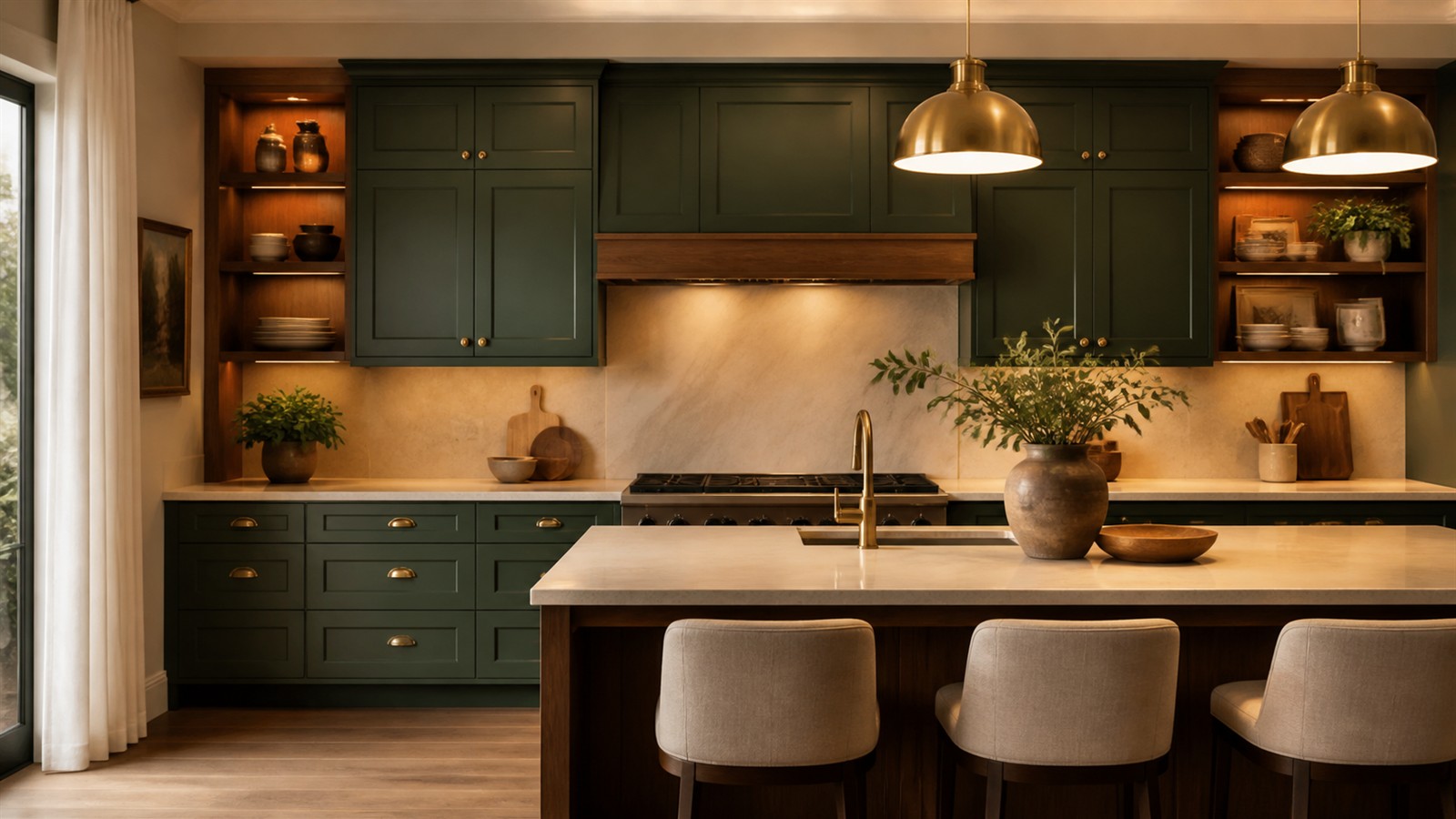
Open shelves and glass cabinets can be beautiful, but they should not hold everything. Visible storage works best for attractive, frequently used items. Closed cabinets should handle the visual noise of packaging and mismatched tools. In a kitchen that is used every day, this choice affects more than appearance. It changes how the room ages, how quickly it resets after meals, and how confident the homeowner feels about the investment.
For cabinet organization, the practical test is simple: the design should still make sense after years of cooking, cleaning, guests, spills, and changing family needs. A well-chosen kitchen keeps supporting daily life while still looking intentional.
Let Empty Space Remain
Every cabinet should not be packed completely full. A little empty space makes storage easier to maintain and prevents one new item from breaking the system. Calm kitchens need breathing room inside cabinets as much as outside them. In a kitchen that is used every day, this choice affects more than appearance. It changes how the room ages, how quickly it resets after meals, and how confident the homeowner feels about the investment.
For cabinet organization, the practical test is simple: the design should still make sense after years of cooking, cleaning, guests, spills, and changing family needs. A well-chosen kitchen keeps supporting daily life while still looking intentional.
Label by Logic, Not by Aesthetic
The most useful storage systems do not need decorative labels everywhere. They need categories that make sense to the people using the kitchen. When breakfast, baking, cleanup, and lunch supplies each have a clear zone, the cabinets become easier to maintain. In a kitchen that is used every day, this choice affects more than appearance. It changes how the room ages, how quickly it resets after meals, and how confident the homeowner feels about the investment.
For cabinet organization, the practical test is simple: the design should still make sense after years of cooking, cleaning, guests, spills, and changing family needs. A well-chosen kitchen keeps supporting daily life while still looking intentional.
Review Storage After Real Use
A cabinet plan should be revisited after a few weeks of cooking. Items that migrate to the counter are usually telling the truth about access. Moving one drawer, adjusting one shelf, or relocating one category can turn a good storage plan into a calm one. In a kitchen that is used every day, this choice affects more than appearance. It changes how the room ages, how quickly it resets after meals, and how confident the homeowner feels about the investment.
For cabinet organization, the practical test is simple: the design should still make sense after years of cooking, cleaning, guests, spills, and changing family needs. A well-chosen kitchen keeps supporting daily life while still looking intentional.